Last week’s cabinet shuffle and some of the awkward stories about ministers unaware that they would no longer be ministers are a stark reminder of the absolute authority the Prime Minister has over who he appoints and how he does it, and the often hamfisted way changes can be made.
To wit, in March of 2016, shortly after I had first taken my seat on the Standing Committee on Procedure and House Affairs (‘PROC’ in Hill parlance – all committees have a four-letter code by which they are known), my highly respected colleague Arnold Chan, the MP for Scarborough–Agincourt, took me for a nighttime walk around the frigid front lawn of Parliament at the end of the day’s sitting. We had just begun to get to know and respect each other personally through our work on the committee, and he wanted to tell me something important.
Arnold had recently suffered a bout of nasopharyngeal carcinoma, a relatively rare form of throat cancer that he believed he had beaten on time to run again in the 2015 election. He was sharp as a scalpel, a political animal with years of experience in provincial and federal politics, and he lived for the work we did. The original discovery of the high genetic risk-factor cancer had caused his brother, Kevin, to also be tested, and they had gone through the bizarre experience of going through cancer treatment together over the winter of 2014-2015.
He told me as we walked that he had recently felt a new lump and knew immediately that his cancer had returned. He had discussed it with his wife, Jean Yip, and their three sons, and he said to me, “they know what this means,” a simple phrase that has stuck with me ever since.
Arnold was the Deputy Leader of the Government in the House of Commons – colloquially, the Deputy House Leader. He would be pulling back from his duties, and he wanted me to take them on for him while he went through his next round of cancer treatment. This would not be an official Officer of Parliament role – he was holding it – but I would fulfil the duties, themselves not well nor indeed officially defined.
It took a couple of weeks of uncertainty to figure out exactly what this meant, but generally it came with two key responsibilities, which I will describe as a separate essay.
On the house leadership team, I spent nearly all my time in the Chamber, generally attending only the procedure committee. But as an MP, I knew that I could attend any committee any time I wanted. With the responsibilities that came with acting in Arnold’s role, I did not start taking advantage of this until I was almost two years in, when I started offering to take individual committee sittings off other MPs’ hands without asking for anything in return so that I could study topics of interest to me.
In the late summer of 2017, I wanted to attend the Standing Committee on Transport, Communities, and Infrastructure, which I had listed as my first choice two years earlier when initial committee assignments were made by the Whip’s office – as had most of the Liberal caucus, due to the word “Infrastructure” being there and massive infrastructure investment being our signature election promise. The committee was discussing Bill C-47, the Transportation Modernization Act, which would modestly reform the rail industry and bring in the passenger bill of rights in the aviation sector.
The committee sat before the House returned that summer in order to get through the bill in time to get it passed early in the fall sitting. As my home was only two hours drive from Ottawa, it was not tough for me to find an MP from much further away who wouldn’t be able to come during a non-sitting week who would be willing to trade – especially as I was asking for nothing in return.
A few days into our hearings on September 14th, 2017, long time Toronto MP Judy Sgro, the committee chair, interrupted proceedings very briefly to tell us:
Just for the information of the committee, we've just been notified—thank you, Ms. Raitt—that Arnold Chan, our member of Parliament from Scarborough, has died. He was a member whom we all very much respected and appreciated. It is with great sadness that I have to make that announcement.
Take a deep breath, and I'm sure all of us will send our sympathies out to his wife and family.
All right, as parliamentarians, we're back to work.
When an MP dies while the House is sitting, the House generally suspends for the rest of the day and the next day begins with tributes. As the House was not sitting that day, the committee carried on without so much as a recess. I swallowed my emotions as best I could and when my next turn to speak came about 30 minutes later, the chair said: “Our next speaker will be Mr. Graham. I have to acknowledge that you had a very close relationship with our colleague, Arnold Chan, in the House leadership. If you want to take a moment to acknowledge that, I believe the committee would welcome that.” I gave a short and emotional acknowledgement of his passing before we took a moment of silence and I proceeded with my questioning of the witness, then Minister of Transport Marc Garneau.
I do want to take a moment to acknowledge the immense contribution to this place of my close friend and our colleague, Arnold Chan.
I know he would want us to focus on our work, to move forward with what we need to do. When I visited him a few days ago, his concern was not about himself, but rather how everyone else was doing. He knew where he was going and wanted to make sure that the rest of us were going to carry on. He wanted to know what was happening here, to discuss our work in procedure and House affairs, where we sat together, and to pick up on the most recent gossip from around the Hill.
He loved this place. He lived this place. Of course, being Arnold, he apologised profusely between laboured breaths that he would probably not be able to join us at caucus the following day or at the House this fall.
On behalf of all of us here, I want to send my best to Jean and their three sons. We are with them at this difficult time.
To Arnold, we will remember to follow our hearts and to use our heads. As we do, Arnold, you will always be with us.
A year and a half earlier, I had accepted to take on Arnold’s responsibilities and had been told that, should the worst happen, I would inherit the role in which I was acting. Arnold confirmed that to me from his deathbed a week before he passed, when my wife and I drove to Toronto to visit him at his home, where he was living on a palliative care bed in his living room. Having learned a lot and been busy, getting the role was not necessarily something I still looked forward to, but I would certainly rise to the challenge if offered.
When the House returned for the fall session after the weekend, I learned that the first Monday morning tactics meeting was cancelled, which was unusual but not especially remarkable. I made my way to the Chamber and discovered that I was the only member of the House leadership team present that day, so while I usually worked to back up Kevin Lamoureux, the Parliamentary Secretary, I was perfectly capable of managing debate in the Chamber on my own and spoke ten times that day.
The next morning, I went to tactics and we went through the whole meeting, running unusually long. At the end, the House leader, by then Bardish Chagger and no longer Dominic Leblanc, announced to the room that a new member of the team would be joining us and she hoped we would all welcome him and work well with him; that she was off to swear St Catharines MP Chris Bittle into the role of Deputy House Leader. I was not sure whether I would be keeping the role or losing it, but I certainly did not expect to find out the answer to the question in a room full of 20 people at the end of a meeting in which I was obviously no longer relevant.
I picked up my bag, commented “that’s a hell of a way to get fired,” and left the room which had fallen into an awkward and immobile silence, my involvement in the House leadership team coming to a thankless, abrupt, and unexplained end. I immediately asked Natalie in the Whip’s office to put me back on the regular House Duty roster, generating a short and impersonal announcement to all Liberal MPs’ offices about which House Duty group I would become part of, essential information for staff negotiating trades so their Members could be off the Hill.
While many reached out to me in the days that followed, and I was kind-of sort-of offered to continue in my unofficial and unpaid non-role on the House leadership team, of which I was the only member at that time to speak French, I never returned.
I went through a period of anger and existential doubt about my purpose in being in Ottawa, and about the utter disrespect shown by the leadership. I spoke to many other MPs who I respected about the experience, and many shared the lack of respect they encountered as well, often more as an amusing anecdote than any kind of actual annoyance. Some complained about not being Ministers in spite of their work to get the leader elected or just because they were better than everyone else, and it gave me pause to question my own hubris and thinking, even fleetingly, that I might be owed anything at all.
A common problem I heard, and one that I also had, was Ministers visiting ridings and only telling the local MP after the fact. I’d already experienced it – the Prime Minister ate at a restaurant in Mont-Tremblant in the heart of my riding and I read about it in the local newspaper the following week as one of many examples. I remember in particular Mélanie Joly passing me in the staircase behind the chamber in Centre Block, the main building of Parliament currently closed for renovation, one day and announcing to me, as if it should excite me, “I was in your riding this morning!”, the local media opportunity for me bringing a Minister to my riding being evidently lost.
One of my favourite stories was from then-Parliamentary Secretary to the Prime Minister (Youth), Peter Schiefke, who, in spite of the important-sounding role, was not given an access pass to the Prime Minister’s office, then still called Langevin Block. He told a hilarious story of being stuck at the entrance to the building, blocked from entering by security, as he was not on the guest list and did not have credentials to enter. 15 minutes late for the event at which he was meant to represent the Prime Minister of Canada, a senior PMO staffer came running downstairs and let him in without any irony, apologising for the oversight – but still not granting a permanent pass.
I realised from Peter’s story and others like it that it was my pride that had been hurt, not my purpose, and once I figured that out, I went back in time to a week before that tactics meeting and remembered that when Arnold had left us, I was at a committee I had no obligation to be at, pursuing files that were of particular interest to me.
What was stopping me from doing a whole lot more of that?
Today, I turn 42. In my family, this number holds special significance.
I learned in my teen years that 42 is the central number to the cult classic the Hitchhiker’s Guide to the Galaxy, and is the single most important number to far more nerds than it should be. It is the answer to “life, the universe, and everything”, though as the story is told, the question itself is never fully resolved.
Reaching this age is causing me a moment of introspection, wondering what meaning my life, universe, and everything has so far, and whether 42 is indeed the answer. Indeed, this SubStack blog exists in large part to figure out my question.
I grew up knowing that my grandfather, Canadian pilot Jack Ross Graham, passed away from what was then called “pilot’s disease” - a pulmonary embolism as a direct result of his long-distance flying at the young age of 42 — in 1959, before the concept of ergonomics had really taken off. It drove my father, who was ten at the time, to later raise his own children to be as independent as possible as early as possible should he suffer a similar fate, so this event more than 20 years before my birth was in many ways central to my upbringing.
My father reacted to his own 42nd birthday by going to flying school, largely in honour of his own father. Each of his siblings reacted in their own way to reaching their father’s age. Many of the men in the family have also had pulmonary emboli through their 40s, leading us to question which violent 13th century clan of Grahams we are descendants of that we need to clot so excessively well.
My parents often described me as being powered by the “inevitability drive”, a play on the infinite improbability drive, where my primary motivation in getting tasks accomplished is that they are going to get done, so I might as well get on with doing them.
It fit then, with 42 already being such a significant number in my life, that when I was elected on October 19th, 2015, it was to Canada’s 42nd Parliament — where I served for 4 years and 2 days.
In honour of all this, I took one minute out of Parliament’s day on May 11th, 2016 to pay tribute to Douglas Adams and his impact on our culture.
Mr. Speaker, 15 years ago today, with Arthur Dent well established in his new life, Ford Prefect returned to this mostly harmless place for Douglas Adams. Marvin the paranoid android was, of course, left behind.
Anyone who has read The Hitchhiker's Guide to the Galaxy is aware that planet Earth is little more than a computer, built on the orders of mice, to determine the answer to life, the universe, and everything.
While I must wrap up this statement, brought to some of us by our resident babelfish, before it is destroyed to make way for a hyper-partisan bypass, it is a great honour to know that all of our colleagues, brought together here today by the infinite improbability drive, will forevermore have our names listed together on a plaque.
The plaque will be here in Centre Block marked, without ever having determined the question, with the answer to life, the universe, and everything, the number of our Parliament, 42.
I can only hope that my next 42 years are as interesting as the last 42.
If a politician or a government succeeds at everything they set out to achieve, nobody will ever know. If they then say something phenomenally stupid at a private party and someone recorded it, their career may come to a dramatic and unceremonious end.
In order to mitigate this and avoid even the slightest appearance of a gaffe, nearly everything that happens in politics is managed through the term “optics”. How does this action, this set-up, this statement, look to the media or the public at large?
To actively succeed in political objectives often requires prolonged failure with only an apparent path to success for the programs that those politicians promote. The optics matter, the results do not.
Luc Lefebvre, my executive assistant for my four years in office and previously mayor of the Quebec town of Sainte-Sophie liked to tell me to remember the story of the mayor and the bridge:
A candidate for mayor runs on a promise to build a bridge, and wins. The next election, he campaigns on a promise to continue the work of planning the bridge, and wins. The following election, he campaigns on a promise to fund and build the bridge, and wins. By the following election the bridge is built, and he loses. There is no more bridge on which to campaign; success is failure.
Both the for-profit traditional and social media environments promote – require, even – controversy, negativity, emotional response. It is far easier to describe a politician as wasting taxpayer dollars than it is to describe a politician as using our common resources to invest in the future. It is far easier to describe a scandal than it is to demonstrate an accomplishment, and it is far more interesting to read, listen, or watch about a bad decision than it is to learn about something done correctly.
For any chance of an objective discussion, there needs to be a facts-oriented rather than profit-oriented structure to the media ecosystem. The only way to achieve that is through some form of public funding, which is easily painted as buying pro-government coverage. But that bias comes from the very notion that money is the only motivator, or that public funding cannot be objective, rather than any notion that public service can or does exist. There is far too much money in politics, and not nearly enough in real journalism, which requires neutral public funding, rather than for-profit funding, to serve an actual role in society, so that the objective is information rather than emotion.
To achieve that, though, is a chicken and egg problem. The optics of a government trying to remove the profit motive from journalism are quite poor. What is it they are hiding? Why are they going after the so-called independence of media conglomerate owners? Why are they using tax-dollars to get themselves better coverage?
We have been conditioned to see all actions by politicians as self-serving, so the stories write themselves. Yet politicians have, themselves, been conditioned to make self-serving decisions because working selflessly to the benefit of the public is neither recognised nor rewarded come the election time that decides their fate.
To wit, one day, in my home town of Sainte-Agathe-des-Monts, shortly after the new Canada Child Benefit was brought in by our government, a young mother yelled at me in a public space about how Prime Minister Trudeau is useless and the Liberals never do anything for people like her. So I asked her if she was receiving the new Canada Child Benefit? Of course, she said, but any government would have done that!
The promise was made and quickly delivered, and ceased to have any further political value. Federal money is manna from heaven and, for the average voter, whatever support is offered is simply something they are entitled to; no election-time vote had any impact on the policy.
John F Kennedy may be celebrated for statements such as “ask not what your country can do for you, ask what you can do for your country,” but few live this philosophy. The question of what the government is doing to help the poor – how homelessness can be allowed to exist whatsoever in any nominally wealthy country defies all explanation – is seldom asked by anyone sincerely hoping for an answer. “What has the government done for me?” on the other hand, is common. And anything that happened over a week ago no longer counts.
Working to the general benefit of society is portrayed as, and understood to be, weakness. Pull yourself up by your bootstraps, we are told, and you will achieve the inherited wealth you believe yourself to be only a single overtime shift or Walmart sale away from having.
Elections themselves are rarely fought on ideas, but on the aesthetics and personalities of the leaders — a war of optics. It is not by accident that Quebec's major parties provincially have nothing to offer between them, perennially fighting over identity politics instead of actual problems to solve, while provincial ballots there quite literally feature photos of the candidates next to the checkboxes, which is why Quebec campaign posters generally have a large photo of the candidate, and tiny text with their name and party.
Functional democracy is more than going to the polls once every four years. It's about understanding what that vote is for and following through to make sure it is carried out. It is about making the connection between the decision at the ballot box and the policy outcomes that may affect voters a year or a generation later. It is about having access to objective, accurate information.
That comes from a fair media environment that no amount of optics can provide, and for which making one more profitable subgroup of private media fund another less profitable group misses the point, even if it makes for good optics.
Optics alone must not be the basis on which we govern.
Politics, it is said, is the art of war by other means. It could also be seen as a professional sports game in which the results matter – and one in which the winning team sets the rules for the next round.
It has always fascinated me, and I started watching CPAC, Canada’s parliamentary channel, as an early teen. For my 14th birthday, I asked for my first party membership, and have spent most of my life since involved in both community and partisan politics. With my focus divided between the worlds of free software and advocacy for better public transit, and my free time going into political campaigns, I eventually found myself on Parliament Hill as an assistant to several MPs until finally running for office myself.
And so, from the election of October 19th, 2015 to the election of October 21st, 2019, I served as the Member of Parliament for Laurentides–Labelle, the 19,694 square kilometre federal riding bridging the rural areas north of Montreal and Ottawa and into the forestry lands of Quebec in which I grew up. I first won with 32% of the vote – and then lost with 33% of the vote.
My unplanned departure left a gaping hole in my sense of purpose, in what is still left to accomplish. That is what I explore here, through anecdotes, writings, speeches, background, and other bits and pieces reassembled from the breadcrumbs of public records and my own notes and recollections. It is not meant as a comprehensive record of my life nor my time in office, but is rather a sampling of both what happened, and what lessons can be taken.
Four years in public office is really only enough to start learning what is possible and how everything works, no matter how many years of involvement and preparation went into getting there. And there is no time quite like the years following public service to think about all the things you could have accomplished if only you had survived just a little longer.
Life on Parliament Hill is not Members of Parliament spending their time at the Parliamentary pub contemplating the deeper meaning of life and how society can be restructured to help those who need it most. It is far more of an endless and unwinnable game of whack-a-mole, where intellectual laziness or the chronic fatigue of 90-hour workweeks can quickly give way to a deferral to self-described experts, paid to provide generally biassed insight, information, and opinions-as-fact under the catch-all description of lobbying.
Most lobbyists on the Hill promote narrow and financially viable private interests. MPs themselves are your lobbyists; their key role being advocates for the public, yet almost none fully internalise this simple concept.
The period since I left Ottawa has been both short and a lifetime, and has left me questioning what I wanted to accomplish, why I was there in the first place, and whether I ultimately succeeded at any of it.
Before being elected, I was determined to bring forward significant society-wide changes on a number of issues, beyond the vague, short-term, or oddly specific commitments of any political party’s election platform. While I never wrote them down as a personal priority list, some that come to mind are:
bridging the urban-rural divide;
transit-oriented infrastructure on a national scale;
true reconciliation with Indigenous Peoples;
seeking true democratic reform but that addresses the right problems;
life-cycle planning for every product sold or manufactured in the country;
free and open source software for all non-classified government needs;
universal basic income; and
the complete demonetisation of politics,
to name but a few.
In the end the only bill I managed to table, too late to move forward and not picked up by anyone after my departure, addressed a single long-term structural issue in Parliament without any obvious relevance to the public prior to the American coup attempt on January 6th, 2021, and the Ottawa occupation of early 2022: the total separation of Parliamentary security from executive influence, a topic likely worthy of a book in its own right.
The above priorities would probably remain undone even if I were still there. There is little likelihood of moving them along because there is no tradition and little infrastructure to support individual elected politicians in actually making a difference. For those wondering why the government generally moves slowly, and rarely in the right direction, this is a significant part of it.
The Parliament of Canada is governed by a strict set of rules. The Elections Act governs getting there. The Standing Orders govern being there. The Lobbying Act and the Conflict of Interest Act govern who you can do what with while you are there.
But many of the rules that actually govern Parliament aren’t written down. They include the rules of human relations, political strategies, and raw games of power. Few people on the Hill hold a degree in political science; the way it really works, in any case, is not taught in a classroom or a lecture hall.
There are strict rules around fundraising and election spending, yet that very money defines every aspect of the political experience. At the same time, investigative and real journalism, essential to a functioning democracy, increasingly lacks funding, and our media environment is reduced to sound bites and artificial “balance” giving voices to well-funded small fringes. Information itself is largely controlled by a small handful of oligarchs within the realm of what we call social media. There is plenty of money in the system, but it is in the wrong places.
The hierarchies of government in reality differ from those on paper. Those who hold the most power are virtually anonymous in the public sphere. Members of Parliament, the only people paid to be lobbyists for the interests of the general public, lack both a clear understanding of their own role and the tools to perform it. Sophisticated lobbyists don’t even bother meeting with MPs except to generate billable hours for clients who do not know any better; they know that is not where the power lies, and they know who to befriend to accomplish the wishes of their high-rolling clients.
From the public point of view in today’s discourse, Members of Parliament are expected to be three things:
first, superhuman, capable of doing anything, solving any individual or collective problem, and being any place at any time;
second, average people with families and lives, who come from private life and will return there within a couple of elections, both empty-handed and fabulously wealthy; and
third, responsible for all the decisions and opinions of their leadership and colleagues, real or perceived – the face of the faceless government.
The role Members of Parliament are supposed to fill is not on this list; that of advocates for the public, there to defend and bring forward the interests of their communities and the country as a whole in a forum of hundreds of other people doing the same thing, seeking common ground to keep society fair and functional.
Members of Parliament are not supposed to be the government’s representatives in the community, nor the government’s representatives in Parliament; they are there to be the public’s representatives in the hall of the common people, and thus be the public’s voice to the government. This body, symbolically themed in grass green, the House of Commons is the primary body overseeing that government and holding it to account, able to express day-to-day confidence, or lack thereof, in the decisions and direction of the Crown as represented by the executive.
Members of Parliament hold the ultimate power and the responsibility to defeat the government and replace it, without the need to resort to violence.
With the recent and continued controversy over Bill C-18 and the growing spat between the federal government and the world's social media giants, it's important to explore what social media companies actually are.
Fundamentally, social media companies track who you are and what you do, like, and want, in order to target advertising toward you. You are the product being sold, which is why you do not pay for the services offered.
This is not all that different from traditional media. As CanWest founder Izzy Asper famously said, the media is not in the business of selling news, they're "in the business of selling soap."
That social media empires have out-competed traditional media on the soap-selling front is not something that can be solved by simply offering compensation to the previous soap-sellers. Social media companies know whether you want soap, when you need it, and what scent you prefer. The traditional media advertising model tells everyone equally that soap can be bought.
News - real journalism - can never function to its true potential when its whole economic model is based on selling soap, rather than being built around the primary purpose of sharing accurate and validated information in the public interest. All the more so if there's something negative to report about soap. Journalism needs to be seen and funded as a public good, not purely as a business.
Ask any small newspaper what the first cost they will cut in a financial pinch is, and, as the person who owned most of the newspapers in my riding told me, the answer is: the journalists.
Social media make you both the journalist and the consumer of soap.
One of the most fascinating experiences I had in office at committee was when I crashed the Standing Committee on Access to Information, Privacy, and Ethics (ETHI), when it sat jointly with Members of Parliament from the United Kingdom, Singapore, Ireland, Germany, Estonia, Mexico, Morocco, Ecuador, Costa Rica, and Santa Lucia to tackle the influence of social media giants on society under the name the International Grand Committee on Big Data, Privacy, and Democracy, part of the International Grand Committee on Disinformation initiative (igcd.org) involving parliamentarians from the 21 nations of: Argentina, Australia, Belgium, Brazil, Canada, Costa Rica, Ecuador, Estonia, Finland, France, Georgia, Germany, Ireland, Latvia, Mexico, Morocco, Singapore, St. Lucia, Sweden, the United Kingdom and the United States.
The committee sat for several days, interviewing some of the brightest minds of our time on the topic, such as Shoshana Zuboff, author of "Surveillance Capitalism", Roger McNamee, early facebook investor and author of "Zucked" and Jim Balsillie of RIM/Blackberry fame, as well as representatives from Facebook, Google, twitter, the US Federal Election Commission, and numerous other witnesses such as renowned filipino journalist Maria Ressa, over several days.
Mark Zuckerburg, founder and owner of Facebook, declined our invitation and as a committee we issued a Summons requiring him to appear at the Committee, which would be reconvened for the purpose, should he set foot in Canada, an unusual step that was, to my knowledge, never acted on, but demonstrates the theoretical power of a Parliamentary committee.
I was not a member of the committee and, by agreement on the numbers present by the permanent members in order to make room for the foreign delegations, I should not have been there. As a sitting MP, my presence could not be excluded by rule, and it was my one chance to ask Facebook and Google directly about their values. I tried to make my five minutes count to try and address, fundamentally, the business model of social media:
The Chair:
Thank you.
We have to move on. I want to highlight what's going to happen in the next 30 minutes. We have two members of the Canadian committee who haven't spoken yet. We're going to give them five minutes each. That gives us, with the people who have asked for second questions, about 20 minutes, approximately three minutes per individual.
Again, we'll go to Mr. Graham first and Mr. Saini, and then we'll go by country.
Go ahead, Mr. Graham.
Mr. David de Burgh Graham:
Thank you very much.
I want to get straight into this. I'm going to focus on Google and Facebook for a minute.
Do you accept the term “surveillance capitalism”, Google?
Mr. Colin McKay:
I think it's an exaggeration of the situation, but it reflects social pressures and a recognition that there is an increasing worry about the data that's collected about individuals.
Mr. David de Burgh Graham:
Facebook...?
Mr. Kevin Chan:
I cringed, I think, when I read it the first time.
Mr. David de Burgh Graham:
You track individuals on the Internet in any way, shape or form without their knowledge or explicit consent at any time for any reason, and you do so for profit.
Mr. Colin McKay:
We have a pretty clear relationship with our users about what information we collect and what we use it for. We secure consent for the information that we use.
Mr. David de Burgh Graham:
But you don't only track information on users. You track information on anybody on the Internet. If you look at Google Analytics and any of these other services that track anybody passing through another website that has nothing to do with Google, you're collecting vastly more data than what is provided voluntarily by users. My question is, again, are you collecting data on people for profit and, if so, is that not surveillance capitalism?
Mr. Colin McKay:
I think in the broad circumstance you just described around people using the Internet, we're not collecting information about people. We're measuring behaviour and we're measuring.... Sorry, that's the wrong term. I can hear the chuckle.
We're measuring how people act on the Internet and providing data around that, but it's not around an individual. It's around an actor.
Mr. David de Burgh Graham:
Or it's around a type of individual, an IP address or this type of information. You are collecting data that can be indexed to people. My point, and I want to take it further than that, is that governments have a tremendous surveillance capacity, as we all know. At least in this country and a lot of other countries around this table, we now have a committee of parliamentarians to oversee our security apparatus, and they go in a classified setting. They dive deeply into the intelligence agencies, what they do, how they do it and why, and they report it back.
If these committees were either created to just focus on social media companies or this committee was applied to it, what surprises would they find?
Mr. Kevin Chan:
Sir, as I've indicated, we want to do more than that by our actions. We're going to make all of that available and then people can...including things that are off platform. If there's a site that uses, let's say, a plug-in or something like that from Facebook, you have available all that information and you can do whatever it is you want with it. You can remove things. You can delete things. You can transfer it. You can download it. That is our commitment and we will be moving fast to get it done.
Mr. David de Burgh Graham:
I appreciate that, but if you go into Facebook and ask it to download your data, the data that it gives you is not a comprehensive collection of what Facebook has on you as a user.
Mr. Kevin Chan:
Right. I think you're referring to when you download your information you get things like the photos and the videos.
Mr. David de Burgh Graham:
You get a handful of your pictures, a handful of your updates and have a nice day.
Mr. Kevin Chan:
That's right. What we want to do is build...and it takes a bit of time. If you can bear with me, it takes a little bit more time to build something that's much more ambitious, which is to then give you actual control over not just the things that you put on Facebook but all the activity that you may have done with social plugs-ins elsewhere, where we can give you the ability to control and remove stuff if you so choose.
Mr. David de Burgh Graham:
If Mark Zuckerberg were to run for president of the United States, for example, what limits his ability to use Facebook's data, machines, algorithms and collection to feed his campaign?
Mr. Kevin Chan:
Sir, if I may, that is a very good question, and that's precisely why we have the policies that we have in place and why we hold so steadfastly to them. It's not...and I think the question kind of came about in a different way. It was, “What if there was a photo of Mark Zuckerberg or a video of Mark Zuckerberg?” The treatment would be the same. That's because these policies have to hold regardless of the direction the wind blows.
As I said before, we understand that people may not be comfortable with the degree of transparency and the degree to which Facebook is able to make these decisions about what happens on our service, which is why we're building this external oversight board, so that these decisions, so that many of these hard precedential decisions, will not be made by Facebook alone. There will be an ability to appeal to an independent body that can make these decisions that would govern the speech on a platform.
Mr. David de Burgh Graham:
I only have seconds, and I want to come back to the independent body in a second.
My point is, if Neil Potts runs for president of the United States and Mark Zuckerberg runs for president of the United States, I suspect that the support from Facebook and the data usage from Facebook would not be the same. On that basis, it would be very hard to say that having Mark Zuckerberg and Neil Potts here is equivalent.
Mr. Kevin Chan:
Again, our policies are for everyone. We would not make any exceptions for anybody, which is in fact why we have these kinds of robust conversations.
Mr. David de Burgh Graham:
Does Mr. Zuckerberg have a—
The Chair:
We're actually out of time. Sorry, Mr. Graham.
Unfortunately I ran out of time before getting to my final question, clarifying whether Mark Zuckerberg has the power to change facebook policies at any time given his absolute control of the company.
It isn’t that I object to social media – I am an avid user. At the end of the day the issue is informed consent. I understand how they work and I accept it; I do not pay for the service, and therefore understand that I am, in fact, the product being sold. This understanding is not shared by all and is not clearly stated by the companies that work that way.
Be clear with what you are doing, and there is no issue. The recent decision by Apple to include a setting about cross-application tracking within applications like facebook, and the overwhelming reaction of users to disable it, demonstrates the extent to which users were not aware and are not comfortable with the business model for the service they essentially take for granted.
But social media is not the cause of the financial failure of journalism. That is rooted in selling soap instead of news.
C-18 is an existential threat, not a benefit, to democracy
Welcome to Substack, where you can subscribe to an individual writer's products for a minimum amount higher than the current price of a complete subscription to the New York Times. Thank you, incidentally, for supporting me with that level of trust.
All of this means that to have reasonable access to a good variety of quality written news, analysis, and commentary can get very expensive very quickly.
Fox News, Rebel Media, and other far-right outlets do not charge access for their material. If you are on a budget, there is a profound political bias in what you can find outside the paywalls of modern media.
Until comprehensive, consistent, reliable, and objective public funding can provide for the information environment we need, billing social media giants for linking to news articles, as implemented by Bill C-18, won't solve this problem.
Facebook and Google's reaction of blocking news for Canadians rather than paying recognised media outlets whose news stories are linked from their platforms per this new government legislation may appear to be bullying, but they are not wrong to take that approach. Social media links to news stories are the bread and butter of many news outlets today, giving the only meaningful access to new readers.
Forcing social media giants to pay for content referred from their platform is a fundamental affront to the core tenets of the Internet, namely that links are free and that all traffic is equal, which has allowed the Internet to become the core social and financial infrastructure of our society.
That right wing propaganda sites are not always recognised as news and may not meet with C-18's definition of journalism, will only further cleave society between those who can pay to be informed from those who cannot. Social media companies eschewing this rather absurd law will not have to compensate or block propaganda; only journalism. The consequences of such are both obvious and dire.
As a legacy item, an otherwise transformative and progressive Prime Minister has chosen an absolute doozie.
Subject matter experts such as Michael Geist have been warning of dire consequences since news first came out of the plan to bring in this law.
There are better solutions possible. Having a universal subscription system would, while imperfect, do a lot to mitigate the current situation.
If the New York Times, Wall Street Journal, Globe and Mail, The Atlantic, the Hill Times, and every other major or minor media outlet that meets basic journalistic standards and has a paywall could work together to have a single, common subscription system, we could start to improve this situation.
If one could pay a certain amount per month for the aggregate collection of quality written material, as they might for a movie streaming service, and have their subscription fees doled out to the participating outlets and writers proportionate to their actual consumption of those materials, we would improve access to quality writing, improve revenue to quality writers, and grow the pie by making written material accessible to a far greater number of people.
If that subscription could go a step further and be the subject of a fully refundable tax credit or even a public allowance to ensure everyone in society has equal access, we would have a credible, democratised funding model that does not take access to quality information from right to privilege. To improve access to media for everyone, the government funding model for media should be guided through the consumers of that information.
At the very least, having generalised access to quality journalism, analysis, and commentary should be as socially acceptable, affordable, and common as a Netflix or Amazon Prime membership, where paying a single provider gets you nearly unlimited quality content.
Fundamentally, having public access and funding for journalism should be as universal as healthcare.
Demanding social media companies pay journalists for the right to send traffic to their content will only bias the information environment away from credible sources and further strangle what is left of the legitimate journalism industry.
Last week's sinking of the Titan, a deep-diving tourist submarine charging $250,000 US a shot to view the wreck of the Titanic out a 20-inch window for a few minutes, captured the imagination of the world's media in a way that exposes some of the deep rifts of our society.
Very early in my mandate, just weeks after the 2015 election, there was a major terrorist attack in Paris, France, killing over 130 people. My newly hired staff, aware of the public attention the event was getting, wanted me to post a statement on my Facebook page, as politicians so often do.
I refused, noting that if we did so, we must also address the 89 people killed the previous day in a suicide bombing in Beirut, Lebanon. I was not going to post only about terrorist attacks that affected affluent Europeans; either we recognize all, or we recognize none. And if we were to do all, we would become little more than a newsfeed for terrorist incidents around the world. That was not our role.
The same day as the Titan lost contact with its mother ship, a fishing boat overloaded with refugees reported to be from Libya, Syria, and Pakistan, capsized off the coast of Greece, with hundreds of them dying and a muted ‘aw, man!’ reaction from nearby European powers, leading to widespread comparisons of the two events and our reactions to them.
What, again, is so special about five people on a high-risk dive to a now-ancient shipwreck requiring the mass international mobilization of navies and coast guards from both sides of the Atlantic? What makes them more special than the hundreds of refugees drowning in the Mediterranean?
The only discernible difference is that one of the vessels had a billionaire on board, while the other had people whose only hope was to have a most basic quality of life leaving, it should be noted, countries afflicted by extensive foreign interference over many years.
It takes us back to some core values we have in western culture, not all of which are to be proud of. When we meet each other for the first time, we often ask each other what the other does for a living. What, in other words, is your value?
If you shoplift from a store and are caught, you can face severe criminal penalties. If the same store steals from you, through dishonest marketing, underpaying employees, or overcharging customers, for example, it is largely dismissed. Pursuing it as a matter of criminal law is all but out of the question; pursuing it as a civil matter unachievable by those whom it affects. The store has more value and is better protected by social structures.
On the Titanic, the life saving equipment on board was insufficient for all passengers. Women and children were prioritized by the ship’s crew, and at that higher paying first-class passengers were given first dibs at living. In the end, 62 percent of first class passengers lived, with just four women in first class perishing, while only 25 percent of third class passengers made it ashore.
Back, then, to the Titan, now lying in pieces just a few hundred feet from the Titanic, forever linked not only by the value society placed on those aboard.
The realpolitik definition of an open nomination is not that it is a fair fight, but that if you beat the party establishment, your victory will be accepted.
As the summer of 2014 wore on, my membership sales improved and we passed 200 membership forms awaiting submission. While credit card memberships could be purchased online or by a printable form, cash memberships - far easier to sell - could only be sold on pre-printed and serial-numbered forms. You could check out 25, return them, and get 25 more to replace them, and a fixed number of people on your campaign could each do that. We had only 100 forms from that, but I also had 77 forms left over from having been the Membership Secretary of the association prior to filing my candidacy, having already submitted 23 of the 100 I had been allocated.
At the end of the summer of 2014, I was preparing to accompany my then-boss Newfoundland MP Scott Simms on a work trip to Vancouver. I checked into my flight online, and was preparing to go to the airport when I suddenly got word that my nomination meeting had been called for Thursday, September 18th at the bowling alley in Mont-Tremblant. While my strongest base of support was in that area, the party did not know that because all of those memberships were sitting on my desk at home, and from their point of view it was a part of the riding where I had no strength.
I was lucky; the party did not employ a blind cut-off with a retroactive membership deadline in my nomination as they had in many others.
With Scott's blessing, I cancelled my flight and rushed back to the riding, selling another 55 memberships that weekend. On Monday, my mother and my brother, who happened to be visiting from England, drove into Montreal with all my forms, into the party office for submission before the cut-off. The receiving agent refused the forms at first, insisting that each cash form had to have the exact cash stapled to it; ours was using paperclips and had been grouped, with $20 and $50 bills being used for families, for example. My mother and brother went to a nearby bank and traded the cash they had for the correct denominations for the forms, and were amused to be given mostly $10 bills with staple holes already in them.
We got a receipt for the deposited forms and over the next few days waited for them to show up in Liberalist. My opponents' memberships all showed up, but none of mine did. After a couple of weeks - time we did not have - I was contacted by the party about the forms I had used: they claimed that I was not permitted to use the forms I had received as the Membership chair to sell memberships for my nomination, and they were reviewing my candidacy itself. I was summoned before the Green Light Committee to explain myself, and ended up hiring a lawyer to fight the case, as there was no basis on which to declare the forms invalid.
In the interim, I also contacted my friend who worked at the National Membership Office in Toronto and asked if they had received my membership forms as they had not been entered. He told me that he had received the forms, but had also instructions from the Montreal office not to enter them until after the date of my nomination. Not only the contested forms, of which there were 77 - 23 had already been accepted and entered in a batch months earlier, but all 250 or so that had been submitted on deadline. I asked if anything was wrong with the forms and he said no, these are valid forms and there had been numerous of the same type from other nomination candidates across the country already accepted and entered, and he had them put into the system right away.
Pablo Rodriguez, who had been defeated in the 2011 Orange Crush in Quebec, was the Quebec campaign chair. All the other candidates for nomination in Laurentides--Labelle had requested and had meetings with him, but I had not seen the need - I knew the rules, both written and unwritten, and knew that kissing his ring was not required to be a candidate. The Montreal office was also largely oblivious to my existence until the flap over membership forms.
When I arrived on nomination night, Mylène Gaudreau,
the party's representative and the person in charge of the nomination meeting's logistics, did not recognize me and asked my father if he was the candidate. Her research obviously not done, it was clear that she had not taken my candidacy seriously. For the party team, Julie Tourangeau was their candidate, and the night would be the final, necessary step.
Pablo Rordriguez was present for the meeting, and as the president of the campaign in Quebec, he was roaming around watching to see how everything was going. As the results were nearly finished being counted, he went into the counting room, came out white as a sheet, and announced he had to go somewhere else, immediately departing the venue, even though it was late and we were an hour and a half from Montreal, with no other events in the province still to take place that evening.
A few minutes later, the candidates were invited into the room and Marc Laperrière, the party lawyer and meeting chair, tersely announced the results: David Graham is the candidate.
We were encouraged to go upstairs as if we did not know the results. Unable to contain my grin, I went upstairs to anticipatory applause and handshakes, taking a few minutes longer than I should have to get into the room. Marc was trying to announce the result and, thanks to French gendering, saying "le candidat éul" gave away the result before I was named.
I had defeated the party organization at their own game, and in so doing became grudgingly accepted as the party's official candidate for Laurentides--Labelle, receiving little information, contact, or support from the Montreal office.
The realpolitik definition of an open federal nomination in Canada is not that anyone interested in running has a fair shot at becoming the candidate; it is that anyone who beats the party will then be accepted as the party's candidate.
With recent calls for Elections Canada oversight of nomination races relating to the Johnston report on foreign interference, it's worth doing a slightly deeper dive into the question of nominations in the first place. Foreign interference may well be a factor, but regulatory oversight of the process needs to go quite a bit deeper.
Most federal political parties describe their nomination processes as open. Technically, it is mostly true. Any member of the public can fill out the extensive forms required for nomination and submit them for consideration. The parties then have a process to ensure that the candidate is, essentially, morally acceptable to the party and that that any skeletons are declared in advance and manageable. The process is generally called the "green light".
Having a green light does not mean the party will do anything to give you a fair shot, and having your skeletons explored and documented reduces the chances that you will fight back or run for another party or independently if you are ultimately defeated or pushed out of the race. It is a kind of blackmail that the parties do not need to verbalize.
In order to win a nomination, candidates need to have the most supportive members show up to the nomination meetings and cast their vote for their preferred candidate. Parties use all kinds of tactics to influence the outcome of a nomination race. Often, they are looking for a demographic result - generally a candidate who isn't Yet Another White Male if they don't have a specific person in mind. The tools they use are access to membership forms and membership data, timeliness in sharing information and processing forms including the green-light application itself, the timing and location of the nomination meeting, as well as the timing of the membership cut-off date to vote, which parties reserve the right to set retroactively and thus favour the candidate they want at the moment that they are leading the membership drive. This last one is referred to as a "blind cut-off".
As an anglophone white male, I was not the Quebec Liberal organization's choice for candidate in my home riding of Laurentides--Labelle in my September 18, 2014 nomination for the 2015 federal election.
While I started selling memberships in the summer of 2013, the campaign did not officially begin until near the end of January, 2014, when the party announced the nomination process and the opening of applications. I filed for my papers almost immediately, and it took more than two weeks for the Montreal office to email me the blank forms to fill out, though I had already managed to obtain a copy of them and so had the answers already prepared. I answered dozens of pages of questions, applied for police background and credit file checks, and gathered up more than a hundred of my published works, as well as the entire historical content of my blog, including posts I had removed at some point, offering it all for the close scrutiny I expected. I put all the information on a DVD and had the whole thing notarized. I submitted everything before the end of February of 2014 and waited for the call to come for an interview with the Green Light Committee, the final decision-maker on whether I met the standards to be a Liberal candidate.
To this point, I had no announced competitors, though I had heard rumours of some who were interested. During the 2014 Quebec provincial election, my principal competitor, Julie Tourangeau, appeared on the scene, also intent on networking on the campaign. She came from the old guard.
The party organization needed female candidates, and an English white male in what was seen as an unwinnable francophone rural riding was not good for their statistics. In spite of being well-connected on the Hill, I began to realize that I was not the provincial wing of the party's preferred choice for candidate, indeed not by a longshot.
By the end of May, my patience at this time was also wearing thin as I still had not received my green light from the Party on my application to run, now three full months old. I had been interviewed on the afternoon of April 22nd over two months after submitting my papers, entering the room as François-Philippe Champagne had exited, and his nomination was now already complete.
At the last minute, the party added a requirement on nomination candidates to sign up 10 new monthly donors to qualify. Anticipating a move like this, I had people in mind ready to go and we filled this requirement very quickly. My principal opponent only filed her papers in May and received her green light in early June, with mine following on June 16th, four and a half months after my application; my first clear indication of a preference by the party.
The party having a preference is not unreasonable in a democratic system where the voters in an election vote only for the party with little consideration given to the candidate. In that environment, the candidate represents the party rather than the community. But if we want to bring relevance back to individual representatives, the party's preference should be limited entirely at the green-light stage and at that only to ensure that the candidate is philosophically in line with the party. After that, there needs to be a fair, consistent, and auditable process to select them and there is nobody more qualified than Elections Canada to perform this task.
Danielle Smith winning re-election last week is a reminder that elections are more about confirmation bias and reaffirming our own prejudices than about working together to find solutions to collective problems.
Our elections have become a lot like passengers on a plane electing the pilot: One candidate has years of experience flying planes and commits to following the rules of the sky. The other promises that everyone will have a first class seat, a great party, and limitless booze for the journey. While one is far more qualified to fly the plane, the other is almost sure to win the vote, and the plane's chances of achieving its destination are greatly reduced - and to add insult to injury, the number of first class seats didn't change, there's no room to party, and the booze fridge can only carry so much. The fundamental weakness of democracy, then, is the uninformed and self-interested voter.
Governance must be seen as a profession, not as a popularity contest. When people say things like: diapers and politicians should be replaced regularly and for the same reason, it misses the fundamental point that both deal with the uncontrolled faeces being produced, but don't create it.
In my experience, people who hate all politicians generally vote Conservative. People who think political parties are sports teams, where the outcome does not matter, vote Conservative. People motivated by division and hatred of the other, vote Conservative. People who feel that tax dollars are stolen from them to help greedy lazy people, vote Conservative. It is an easy set of groups to which to market. Nothing concrete needs to be offered, no commitment needs to be followed through, no truth is necessary.
The power brokers of the modern Conservative coalition consists, principally, of assorted supremacists:
Ethnic supremacists (for example, white nationalists)
Religious supremacists (the Christian Right, largely a breakaway from point #1)
Socioeconomic supremacists (those wealthy people who delude themselves into thinking that their wealth was achieved without the help of the government-backed infrastructure and social structures of society)
They are supported by three broad categories of people:
The naive: those who think that they will magically become fabulously wealthy some day while largely not understanding that $1 billion is unfathomably larger than the $100,000 they are aspiring to – and don't want taxed should they achieve it
Cynics: people who think all politicians are corrupt, so what difference does it make who you elect
Groupies: people who believe politics is purely a team sport, where the actual policy is not relevant, and the only thing that is actually important is "owning the libtards"
Catering to all these different groups within the large tent of the Conservative party is dangerous. None of them seek the betterment of society or the equity nor equality of the people. They speak of protecting the middle class, but have been the fundamental element at the core of its very destruction. The people who support them aren't bothered - all politicians lie anyway, right? There were obviously not enough first class seats on the plane. But at least these liars are our liars.
The Conservative Party is, in essence, the party of exploitative poverty. It seeks to divide society into owners and workers. But their key accomplishment is that they have convinced the workers that the egalitarian society promoted by the left means that people who they view as inferior, whether religiously, by gender, sexual orientation or identity, or simply by sports team (political party), will be treated as their equal, and that any action taken to bring about an egalitarian society constitutes government interference in the lives of workers. They seek to conflate working class and middle class, the latter of which is basically the mythical middle ground between owners and workers.
Back, then, to Alberta, where a Conservative premier who has openly advocated for the effective end of universal healthcare, was against public health measures in the face of a global pandemic, and is generally against anything that serves the collective good has been re-elected for all the reasons above, while the competent pilot is again left to sit in the passenger cabin.
This is, after all, Alberta, where being Conservative is a question of identity, not policy.
The question of electoral reform is one I have been passionate about since the 2007 referendum in Ontario, and a file I have been active on for the entire period. I won't dive into it too deeply unless there is an appetite to discuss it further, as my experience in this matter is that most people who have an opinion on the matter of electoral reform are so entrenched as to make party officials appear to be undecided in a general election.
But there are a few points that I think must be made.
First and most important is that changing voting systems changes voter behaviour. You cannot accurately state the results of an election in a different system based on the votes cast in the current one. If we switch to one of the myriad types of preferential ballots, voters' conscience-vote would be followed by their practical or strategic vote, where today only the latter is generally true with no record of what the conscience vote would have been.
However the fact that the many forms of preferential ballot - Alternative, Borda, Condorcet, etc - can be voted on differently, and indeed produce different results, means that any such system will be the subject of easily sold negative campaigns by their opponents. If you count the same votes under a different abstract name and come up with a different result, you can imagine the cries of fake results and stolen elections that would result in our current political climate.
Mixed Member Proportional is the most widely advocated reform, and is far and away the worst electoral system devised by mankind, solving none of the problems of our existing single-member plurality system, while bringing elements of proportionality aimed at having parties represented to the people, instead of the people represented. Who represents who to who is an often-forgotten question in the debate. That most countries who have implemented MMP have backtracked after discovering it is the easiest of all electoral systems to abuse by simply splitting parties into paired list-parties and seat-parties, and that Germany, the oft-cited model, brought it in to get away from the pure proportional system that existed a century ago, is conveniently ignored.
Electoral reform that aims to implement proportional representation addresses the wrong problem. Our problem is the fundamental and increasing irrelevance of Members of Parliament as party leaderships become ever more powerful and centralized, coupled with an intellectually offensive media approach to elections that treat Canadian elections much as American presidential elections. If we accept that we are merely electing a party leader surrounded by meaningless lackeys with nothing of substance to offer in their own right, then please, by all means, implement proportional representation. Ask list MPs in other countries how many constituent phone calls they return. Let me know if they call you back.
If the purpose instead is to improve our democratic outcomes, to put emphasis on 'representation' instead of 'proportional', then we have to remove the party leader's veto on candidates, weaken (but not eliminate - refer to Sen Joe Manchin in the US for an example of why there needs to be some party discipline) the party whip, bring in some form of preferential balloting that reduces strategic voting and disincentivizes voting strictly on party lines, completely and unequivocally end both the presence of private money in elections and the right of representatives to continue to hold outside jobs while in office, and ban aggregate or multi-riding polling. In many ways it would be better to return to a system where we elect our MPs locally; they go to Ottawa and band loosely together into political parties, and only then does each one select a leader - for that session of Parliament - with whichever leader is able to garner the confidence of the House becoming the Prime Minister until dissolution.
If that sounds like a tall order, we must ask ourselves why. Whose interests prevent each of those aspects from being implemented, and what does leaving each aspect as-is do for the public good? To ask the question is to answer it.
Earlier this month, Navdeep Bains, who was Justin Trudeau's minister of Innovation, Science, and Economic Development from 2015 to 2021, announced he had taken on a new position as chief corporate affairs officer at Rogers Communications. As Bains had been the federal minister responsible for regulating much of what Rogers does, one might well ask some questions about the revolving door between the public and the private sector.
As a former designated public office holder (DPOH) myself, I am in the midst of a five-year ban on anything that can be qualified as lobbying. That is, any position where I would be interacting with the federal government for more than 20 percent of my time is professionally off-limits. When I was elected in a rural Quebec riding in 2015, all the rookie MPs were invited to a briefing with the ethics and lobbying commissioners. I rose to ask a simple question: "what is the difference between lobbying and influence peddling?" - to which then-lobbying commissioner Karen Shepherd responded, in whole: "Influence peddling is illegal!"
That there must be a cooling off period in which well-connected former leaders of our country may not lobby is, to me, tacit recognition that the line between the two is somewhat blurry.
Many former MPs and other designated public office holders get around this by seeking employment with lobbying firms as "lobbying consultants" or similar roles, where they don't directly interact with the people they aren't supposed to for more than 20 per cent of their time; they just share their contact list and strategies with those who do.
One might ask what all these former DPOHs are selling. It isn't likely to be skills in door knocking; rather it is often access to the network of people they have developed through their time in public office. A call from John Doe asking for a meeting may not be answered quite as quickly as a call from, say, Don Boudria asking for the same meeting. It is also an inside knowledge of how the government works and how decisions are made, which is related to the first point - being on a first-name basis with the people making those decisions is something of an advantage in the game of professional government interaction.
But not all former DPOHs end up as lobbyists. Some just end up working in the industry they happened to regulate. Navdeep Bains is a case in point.
Through my short time in office, I spent immense energy and time working to get my own government to invest rapidly and completely in universal high-speed Internet, especially for rural Canada from which I hailed. My take was that Internet connectivity is as important as physical connectivity, namely roads, and that publicly funded infrastructure should remain in public hands. While we assessed the total cost of universal high-speed Internet at around $40 billion for the country, hard lobbying by rural MPs convinced an unenthusiastic Finance Minister Bill Morneau to support Bains' proposal for a program called Connect to Innovate. While the amount Bains' department requested was never shared, even internally, Morneau came through with a $500 million commitment in his first budget, just over one per cent of what was needed to achieve the goal - and less than two-thirds of what the federal government provided to develop only the first stage of Ottawa's LRT, a stark reminder to all rural MPs how little rural infrastructure matters to urban leaders.
Within weeks of the announcement of the program, in my own riding of Laurentides-Labelle, the community put together a proposal to create county-owned Internet infrastructure, providing fibre to the door to all but the most remote of households in one of the poorest counties in the province, and adding the infrastructure cost to the municipal tax bill, with the service provided by a community-owned cooperative created for the purpose. It is, to my knowledge, the only project in the country to be funded that was entirely in public hands.
I and others tried hard to ensure that any Internet project funded by the federal government would be public; that access to the fibre optic corridors that would be created all over the country would be accessible to anyone - and not be held as a monopoly by any private corporation.
The telecommunications industry, on the other hand, worked hard to ensure that private partnership would be a requirement in this program driven and managed by the Department of Innovation, Science, and Economic Development, and that the Internet infrastructure would be publicly subsidized, but remain in private hands. There would be no limitation on a company receiving the $13 million limit in federal public funds, along with the matching provincial funds, to build a project, while refusing to share that publicly funded infrastructure with any other service providers or players.
Private telecommunications companies ate up the bulk of the money and much of rural Canada continues to have limited Internet access. But now, Bains, the minister responsible at the time, has landed gainful employment with one of the biggest players in the field. And for that, I congratulate him.
Question Period has become a parody of itself. Sitting four years on the government side back bench, it was baffling. But question period is a symptom of, or an expression of, wider social problems, not the cause of them.
We would have fascinating, in-depth debates from time to time, under the heading of Take Note debates. We had interesting debates around private members' bills. We had good interactions in legislative debates, particularly in the question and answer period that follows so many of the often canned speeches. Committee, always recorded and often televised, was host to the meat of what we did on the Hill as parliamentarians.
The public only paid attention to question period, the least useful, productive, or informative activity to take place on the Hill. The galleries were full during question period, and barren for almost any other activity. 24 hour news channels would cut in to watch question period, cutting out after the leaders' rounds. The perception built is that question period is all that MPs actually do.
For those of us sitting in the room who weren't either asking or answering a question, it was 5 wasted hours every week. When ministers were absent, back benchers would be brought forward to fill the front bench. The opposition did the same thing, ensuring the visuals were appropriate for those few minutes each day that anyone was aware of what we did.
Question period's status as the looking glass through which the world sees Parliament is a self-perpetuating problem. To get noticed in question period, one has to be ever more outrageous, or have a trademark style like Jacques Gourde's over-the-top emphasis on the last word of every question he asks.
Parliamentary rules around privilege mean there is effectively no accountability for anything said, especially during question period. There's no liability for misrepresenting facts or straight out lying. Question period cannot be interrupted by points of order or questions or privilege. Very often as soon as question period is over, members rise on points of order to litigate statements that came up during question period. Unless someone straight out called someone a liar - against Parliamentary rules even if someone obviously lied - the speaker almost always rules that whatever was said was simply a "matter of debate".
Standing order 37(3) offers the recourse of an "adjournment debate", where a questioner can appeal an answer and ask for ten minutes more debate on the point at the end of business. There are up to three such debates every day, but nobody is even aware of them and only the Member asking and a representative of the government need to be present for them, the house having already technically adjourned.
Decorum cannot easily be maintained; the speaker's hands are effectively tied by a few rules entrenched in the standing orders:
Standing order 9 means that the speaker intervening on what is being said can be interpreted as participating in the debate:
The Speaker shall not take part in any debate before the House. In case of an equality of voices, the Speaker gives a casting vote, and any reasons stated are entered in the Journals.
Standing order 10 gives the speaker absolute authority, but zero power, over decorum. He can rule on points of order, often days or weeks later, but in the moment is given the responsibility to preserve decorum without any tools with which to do so:
The Speaker shall preserve order and decorum, and shall decide questions of order. In deciding a point of order or practice, the Speaker shall state the standing order or other authority applicable to the case. No debate shall be permitted on any such decision, and no such decision shall be subject to an appeal to the House.
Standing order 11 gives the speaker the one instrument he does have, which is the "naming of a member", which is Parliamentish for kicking someone out of the House for the rest of the day. The trouble with this power as all speakers are acutely aware is that it kicks irresponsible Members out of the House directly into a media scrum eager to hear more about why they were kicked out, turning an offense into an "earned media" victory. Getting kicked out of the House is the best thing that can happen to an opposition member looking to make a point.
So the only power the speaker actually has is to simply stop seeing a Member, and refuse to recognize them when they rise in the House. Milliken did this. Regan did this a little bit. I haven't watched much since Rota took over but I would be surprised if he didn't also do this. But this, too, is limited. It's one thing to refuse to hear from a rowdy backbencher, it's quite another to not recognize the leader of the opposition.
At the end of the day, when the leader of the opposition attacks the decorum of the house and the integrity of the very institution in which he sits and serves, there is no institutional protection or recourse. It is left entirely up to the voters to resolve.
But in a world where economic and social imbalances are getting worse each and every day, and greater and greater numbers of voters feel they can't get ahead and are looking for easy explanations, behaviour like Pierre's - attacking the system, blaming the government for everything, regardless of their actual role or influence in the matter, and undermining the very function of democracy - are a positive. 'This guy tells it like it is, after all, and we should vote for him! He'll show them!' He is, essentially, Trump with a brain -- a very dangerous prospect indeed.
The solutions aren't easy nor obvious. Trudeau once got pilloried for addressing "root causes" of terrorism, but the solutions to our decorum problems and our structural social and economic problems have to be seen from that perspective. Question period is an expression of what we are becoming as a divided society, angry at increasing dysfunction and unsure of who or what to blame, expressing that anger less and less rationally on social media and in the centre of our most important public spaces: through question period.
To solve Question Period, we have to solve rural-urban imbalances, desperate poverty living next to obscene wealth, an education system that trains factory workers instead of inspiring creativity and critical thinking. And with snake-oil salesmen like Poilievre successfully offering fake solutions to real problems, we have a long way to go before our trajectory even begins to start heading in the right direction.
Why do lockdowns and pandemic restrictions continue to exist?
It seems to me that people have by and large forgotten what these endless lockdowns and restrictions are actually for.
The lockdowns were never expected or even intended to eradicate the disease itself. They're quite simply about preventing the collapse of the healthcare system. The closer a province's ICUs are to capacity, the stricter the lockdown, regardless of where any particular government is on the spectrum.
Unvaccinated people are vastly disproportionate users of ICUs in this pandemic and are therefore directly responsible for the continued severity of the restrictions. It's ironic that those protesting are most responsible for the continuing conditions that they protest.
Personal freedom over collective responsibility has reached its logical conclusion.
Parliamentary privilege: an arcane concept that can prevent coups
On October 22nd, 2014, a lone gunman with a century-old rifle arrived on Wellington Street in front of Parliament Hill in an unplated vehicle. He got out, shot Corporal Nathan Cirillo in the back, ran up to Parliament Hill, carjacked a vehicle, and entered the front door of Centre Block, shooting unarmed House security officer Samearn Son. He ran the full length of the Hall of Honour before being killed by RCMP Constable Curtis Barrett and House Sergeant-at-Arms Kevin Vickers.
In the weeks that followed, it became clear that parliamentary security was badly siloed and uncoordinated, unable to efficiently handle the bizarre circumstances that were faced that day, and simply lucky that the outcome was not far worse.
The Harper government quickly moved to restructure parliamentary security under the aegis of the RCMP, whose authority on Parliament Hill had traditionally stopped at the doors of the buildings. The separate House and Senate security services were consolidated and combined with that of the scanner operators, the people who run airport-style security at the building entrances.
Immediately, questions were raised about protecting the independence of Parliament. The Hill's security personnel would no longer operate purely under the authority of the legislature that they were there to protect. Henceforth, they would be under the operational control of the RCMP. While the RCMP operates at arm's length, the commissioner ultimately depends on the confidence of the cabinet.
On June 23, 2015, the new Parliamentary Protective Service (PPS) got up and running, but the issue of the independence of Parliament was not substantively addressed. Over the next years, many MPs argued that it was critical to remove the Mounties, a police force controlled by the government, from the parliamentary precinct, unless called as backup. To these MPs, of whom I was one, an existential, if arcane, threat to Canadian democracy had been created.
In the previous system, the House and Senate were each responsible for their own security, under the auspices of their speakers through the sergeant-at-arms and the usher of the black rod, respectively, thereby ensuring their independence but not their coordination. In the new system, the director of the PPS must be a uniformed RCMP officer, meaning he or she reports on operational matters to the commissioner of the RCMP -- regardless of whether the PPS officers working in the precinct are themselves Mounties. Only on policy and budget questions does the director consult with the two speakers.
Cabinet ministers are almost always elected members of the lower house. More important, however, they are the government. Centuries of events and tradition have ensured and expanded the separation of powers between the government (or executive) and the legislature. Heads have quite literally rolled on this point.
The principle of the separation of powers seemed thoroughly theoretical when the security services were being consolidated. Yes, in theory, a future Prime Minister could order a future commissioner of the RCMP to order a future PPS officer to prevent an opposition MP, or several of them, from entering the chamber to cast a vote, perhaps a vote on a non-confidence motion. Blocking certain members might save the government of the day from falling.
Theory, yes. But all this is possible. It is why I fear that the executive's control of the legislature's security presents a clear and present, if long term, danger of dictatorship.
But dictatorship could never happen in Canada, could it?
On Jan. 6, the question left the realm of academic theory. Intent on a coup, defeated U.S. President Donald Trump urged his supporters to storm the Capitol in Washington. They swept aside the woefully undermanned Capitol Police, looted offices and left seven people dead. The Capitol Police are controlled by the legislative branch, by the two houses of Congress. As we have learned since, the executive branch had advance notice (through the FBI) of the impending attack, but did not warn Capitol Hill on time. And, critically, the executive branch though the secretary of defence stalled for three hours before ordering the National Guard to break up the riot, only permitting intervention when it was evident that, as a coup attempt, the assault had failed.
Donald Trump manipulated the separation of powers to his nefarious purpose, abusing his position to prevent the physical protection of the legislature. That the threat to democracy, perceived as hypothetical in Canada, became reality just two months ago in our backyard is a stark warning.
"Privilege" -- the right of MPs and senators to work unobstructed -- is little understood, but critical to the functioning of Parliament. The RCMP cannot both report to the cabinet and protect the legislature if our democracy is to be secure.
One day, the Mounties will have to make a choice, and it may not be the right one.
President Biden, should he survive all the court challenges and nastiness -- see armed intervention of vote counting in Arizona, for example -- and make it all the way into office in January, is a temporary reprieve, not an end to the American Nightmare.
He was not the choice of the progressives. He was not even really the choice of the American people, who are in the process of handing him the weakest of mandates in what should be the most perfect of electoral circumstances.
Biden has said he only plans to serve for one term. Already being past the age of mandatory retirement for a Canadian Senate or Supreme Court seat, that is probably sensible.
In his single mandate, he will face a vengeful and unhinged Republican-controlled Senate, which will make accomplishing anything at all in itself an accomplishment.
But accomplish he must. His strategy to rely on soft Republican voters did not work -- more Republicans voted for Trump in 2020 (93%)than did in 2016 (88%). His victory was given to him by two major factors: COVID19 and the current President's utter mismanagement of the file, and Progressive America's willingness to hold their nose and vote for him, in spite of being the quintessential establishment candidate -- in a country that is so eager to dump an establishment that does not work for the average person, that they voted for Trump in the first place.
And that is the point. The root angst on the left and on the right is essentially the same. In the plutocracy nigh kleptocracy that the US has become, the average voter knows that the system is not meant to work for them.
The American left's response is to offer a more socialist vision for the country, where the people take care of each other society-wide. One in which the cracks are filled in so that people may not fall through them any more.
The American centre's response is that there is nothing wrong, the country is running exactly as it should. GDP growth is great, stock markets are healthy, and population numbers are just that -- numbers, rather than, you know, people -- and that billionaires are a perfectly healthy byproduct of a free society.
The American right's response at the grassroots level is to conflate the centre for the left -- easy and fairly obvious to do in a two-party system -- and blame the "libtards" for taking what little they have, to share with everyone else who didn't work as hard as they did to get it. Someone who destabilizes the system, pockets what he can for himself, and does things that piss off the "libtards" is great, because the system they gave us sucks so anything that makes them angry must be good. And in this broken world, someone who manages to get richer and pay no taxes while in office is a hero -- he's sticking it to the man. Opportunists see this as an easy market to gain power, and with the deep cynicism of this perspective, ethics and accountability is a non-issue.
The left, here, held their noses and voted for the centrist to prevent the right wing reactionary from continuing to burn down the country.
The story does not end there. The left keeps voting for centrists, believing in compromise and having a worldview where everyone is of equal value. A compromising left moves to the centre, and the centre moves ever-further to the right, until we have the weirdly skewed spectrum today in the US where their "left" is almost everyone else's "centre-right".
But the American left has had enough. If Biden is not a clear and ambitious transformational progressive, willing to shake up the country to work for everyone on the level of FDR and his New Deal, the left in the US will not fall for the next candidate's platform after having been hoodwinked, yet again, and will no longer be willing to compromise or hold their noses to vote for the centrist to block the opportunist.
Failure to make real progress that tangibly benefits both the disillusioned left and the disillusioned right who know the system does not work for them will be disastrous in the long term; the Democratic party will be eviscerated in the 2024 election, and an intelligent, charismatic, competent, organisationally-skilled autocrat will rise in Trump's place.
American Democracy, already hanging by a thread, will face its greatest challenge yet.
So why, as a Canadian, do I care so much?
Because the Canadian right's leadership is watching the Americans closely, is trading knowledge and manpower with their American counterparts, and looking to bring that same division to Canada to seize on the same angst to achieve the same power.
Because in a right-wing autocrat leader to the South, a Conservative government will see opportunity rather than danger.
In watching Democrats attacking each other again this week, I think it is important to put my gentle warning in writing as a nominally disinterested foreign observer:
Democrats have no serious chance of winning the presidency in 2020 because they still have not, by and large, understood why they lost in 2016.
In 2016, the "ballot question" was as clear and concise as it could have been:
Do you want the establishment?
Yes: Hillary Clinton.
No: Donald Trump.
That Clinton won the popular vote but lost the election is, to the urban middle-class, a sign of how broken the American electoral system is, that underpopulated states have a greater weight in the system than the wealthy, mainly coastal, metropolises. Democrats across the country cannot understand how voters could vote against their own self-interests. But they are missing the point by a country mile.
The trouble is, we, collectively, measure success by the value of the stock market and the growth of GDP; of the quantity of people employed and not of the quality of those jobs. We describe everyone as middle class, and we congratulate ourselves for defending them.
Right or wrong, these concepts are urban. When the GDP and the stock market go up and the jobless numbers go down, the communities outside the cities are not enjoying the benefits. Their costs continue to rise but their revenues do not. Their debts rise and their ability to repay them evaporate. The good union jobs of previous generations are long gone, nobody having defended them, and they are too busy trying to survive to contemplate why this is the case.
All they know for sure is that the establishment does not work for them. That "middle class" is a term urban denizens use to describe themselves and the people around them; that all the growth they hear about is not coming to their community. To them, that growth and prosperity is all just another lie. The simple, clear messaging of Fox News and the rising alt-right media is understandable; clear blame and simple explanations are offered to complex problems, and they are receptive because their problems are fundamentally not recognised by traditional media, who no longer serve small markets.
That Trump is known to be a liar is irrelevant, if not outright advantageous, in this context. That he has been impeached for what amounts to treasonous behaviour even more so, giving reason to the belief that the establishment is terrified of this man and will do anything to get rid of him -- and if that is the case, then surely he continues to be the anti-establishment candidate, there for the forgotten folks outside of town.
Make America Great Again was never a slogan to make Trump's old Manhattan neighbours feel better about their lives. It is about telling disaffected voters that they deserve a piece of the pie. When people see billions being spent on highway and transit projects in the big cities, and the countryside is told that a few million dollars is too much to get them connected to the Internet or to fix their crumbling infrastructure, it is clear who matters -- and who does not (see https://www.citylab.com/perspective/2018/12/rural-america-us-economic-future-new-york-times-wrong/578740/ for some good analysis). From there, the right wing message is an easy sell: 'Just cut our taxes and stay out of our way -- government doesn't do anything for us anyway.'
That he has only succeeded in raising the taxes of those who can least afford them, losing American jobs, hurting international relations and diminishing America's role in the world -- while greatly benefiting the upper class, and generally doing everything wrong from the perspective of the urban elite, is very much by design. Succeeding would be failing.
Reducing the hardship of the working poor now dependent on dollar stores for groceries would give them the opening to see the fraud being perpetrated on them.
Trump is indeed making America great again for these voters. He is keeping the urban elite on the run. His failure to accomplish substantive change is just further proof that he is still needed to keep up the fight. He is, himself, the very greatness that America will be implored to keep this year.
Campaigns matter. This year, Trump will win because Democrats will press all the wrong buttons, and he will portray himself as continuing to fight for the great forgotten masses; that he is robbing them blind while urging their support will not enter into the electoral calculus.
After the election, he will move quickly to consolidate his power. His pardon of accused war criminal Eddie Gallagher was not an accident. It served two purposes: it irritated the urban elite, helping the narrative that they are out to get him, the anti-establishment candidate. And, in the long game, it demonstrated, along with imprisoning and separating thousands of immigrant children and many of his other acts, his increasingly limitless power in the face of a Republican party more afraid of losing to a Democrat than of losing a democracy.
In 1979, Saddam Hussein famously performed a public purge of his Ba'ath Party, executing people that everyone knew had done nothing wrong for the specific purpose of demonstrating he could do it -- and there would be no consequences. Video was distributed to make sure everyone got the message. Make no mistake, Trump's actions serve the same ultimate purpose. Underestimate him at your peril.
The Republican purge of voter rolls and voter rights and the inevitable installation of a fifth Supreme Court justice unwilling to stop him will help him consolidate his power into retaking majorities in the House and Senate and more state legislatures in 2022 by whatever means are necessary.
From there, Trump will be in a position to move to repeal the 22nd amendment. With all the fixes needed in place, his physical health may be the only thing between him and a third term.
The Democrats will go after Trump for being a bad president, so bad he is only the third ever to be impeached, missing completely that the reasons are completely beyond the understanding and interest of most of Trump's accessible voters -- all of whom will turn out to vote, where turnout will be the most important deciding factor. And Republicans will stay firmly united.
Democrats will fight among themselves and centrist Democrats will stay home rather than vote for that evil socialist Bernie Sanders or excessive progressive Elizabeth Warren -- or left Democrats will stay home rather than vote for that quasi-Republican Joe Biden. The progressive centre through the hard left will not coalesce around a single candidate and get out en masse as they did for Obama 12 years ago. And when they do address the American people, they will only speak to those whose votes they already have, ignoring the industrial heartland, whose labour movements collapsed as corporate - read: urban - America raced to offshore every good job and break every union, and they will not address the severe rural angst that exists beyond the boundaries of every city in America.
It does not need to be this way. The progressive centre and left across the United States must start addressing rather than ignoring rural angst and culture and put aside their differences to fight as one -- for all American people, not just those who live within a country mile of a traffic light.
Don't blame the electoral system. It is there specifically to ensure that the vast underpopulated rural states do indeed keep their voices and cannot be forgotten; rather, solve the economic disparity between urban and rural, between wealthy metropolises and impoverished industrial towns, resource lands, and agricultural areas that gave urban its wealth in the first place.
A podcast with Michael Geist on technology and politics
Over the few years I had the responsibility of representing Laurentides--Labelle in Parliament, I spent a great deal of time and effort talking about technology and their related issues within politics.
One of the people I had the opportunity to meet along the way is Professor Michael Geist, Canada Research Chair in Internet and E-commerce Law at the University of Ottawa Faculty of Law, who I had been following for years.
After my defeat, he invited me to his office for a conversation about the experience of being a technologist in national politics, and you can listen to the conversation on his blog:
Welcome back! Almost a decade since my last entry, this site is back on.
It has been an interesting decade.
In 2009, I started working for an MP in his constituency office.
In 2010, I moved back to Quebec and looked for, and found, work on Parliament Hill.
In 2012, I met Mishiel.
In 2013, I decided to seek the Liberal nomination in Laurentides--Labelle, the riding where I grew up and where I had moved back to live.
In 2014, I had a daughter, and then won that nomination.
In 2015, I won the election and became the Member of Parliament for Laurentides--Labelle.
In 2018, I was acclaimed to run a second time in Laurentides--Labelle.
In 2019, while my vote percentage and raw numbers rose, I was defeated in the Bloc wave.
So, as I consider my next steps, I will go over some of those events and post some analysis of that time and what happened, and backdate entries based on publications and Hansard from my time in office.
For the past several days, I have watched as many people miss the point on electoral reform.
Way too much effort is being spent on the question of "proportional" and not nearly enough on the question of "representation."
Changing voting systems changes voting behaviour, so one cannot simply apply the results of one system to a different system.
Poll aggregators are self-fulfilling prophecies. Voters check for local momentum where none is measured, and share that information with their networks, while the data they are using is national numbers aggregated historically to local campaigns without any measurement of the current impact of the local campaign.
The fundamental breakage of our democracy is that we have 338 local elections, but we vote in a presidential manner - as if the party name or the leader's name are what is on the ballot.
I did not win in 2015 nor lose in 2019 because we did not have a proportional or preferential system; the results I had in both cases had a great deal more to do with the national campaign and the horse race numbers than my own efforts on the ground or those of my opponents. Yet the intent of our electoral system is to send local representatives to Ottawa to work together to find common ground with others across the country (not only the province) to solve our issues together, and do so by adopting a party banner that represents the issues those representatives intend to address.
The problem, at its core, is that local representation matters less and less and national campaigns matter more and more. The two solutions are either
- to say, ok, sure, national campaigns are easier than local campaigns to run and to cover, and we group-think anyway, so let's institutionalize this system by going to a proportional model of some sort, which puts more emphasis on the party and reduces the pretence that local representatives are relevant;
or
- to eliminate the horse-race and national narrative in favour of encouraging each community to make its own decision, and figure out how to make local representatives become once again relevant as local representatives, bringing that power and influence back to the communities that are choosing those representatives.
It comes down to a values question: proportionality and representation are essentially mutually exclusive; which one is more important to you?
2019 Fall campaign newsletter / infolettre campagne d'automne 2019
From here, for here
Dear Friends,
By choosing to move forward together, we can fight the climate crisis, as we demonstrated in Val-David during the “Planète s’invite au Parlement” march. I have always said that to properly represent you I have to know our community. Over the past four years, I have worked ceaselessly to make the federal government a partner for our region. I have participated in thousands of community events and meetings with residents in every one of the 43 municipalities in Laurentides—Labelle.
Together we have accomplished great things. Our region has benefited from historic investments, both in infrastructure and in social programs. However, I am aware that there is still much work to do so I am simply asking you the question:
Can I count on your support to continue this work for a second term?
I was born in the heart of the Laurentians, and I live on a multigenerational homestead in Sainte-Lucie-desLaurentides. Environmental factors have always been a part of my upbringing and I want to work together with you to deal with the climate crisis. I firmly believe that the Liberal Party has the best and most realistic plan to protect our environment while helping our economy to grow.
I began my career as a journalist specializing in technology. This expertise helps me a lot when dealing with the internet connectivity file. We have brought one of the biggest connectivity projects in Quebec here: within the next two years, fibre optics will be available to more than 18,000 homes in the riding that have been poorly served until now.
In Ottawa, I founded the Liberal National Rural Caucus to ensure that the voice of the regions is listened to and understood. I was a member of four permanent parliamentary committees and worked on hundreds of files to ensure that government decisions had a real and positive impact for the people here.
What I have done, and what I hope to do, is intimately connected to who I am. I am from here, and I work for here! I am offering to continue being your link to the federal government and to continue the partnership to develop Laurentides—Labelle.
Choose forward, together!
- David
D'ici, pour ici
Chers amis,
C'est en choisissant d'avancer, ensemble, qu'on peut lutter contre la crise des changements climatiques, comme on l'a démontré à Val-David lors de la marche “la Planète s'invite au Parlement”. J’ai toujours dit que pour bien vous représenter, je dois bien connaître notre communauté. Au cours des quatre dernières années, j’ai travaillé sans relâche pour que le fédéral soit partenaire de notre région. J’ai participé à des milliers d’activités communautaires et de rencontres avec les citoyens, dans chacune des 43 municipalités de Laurentides—Labelle.
Ensemble, on a réalisé de grandes choses. Notre région a bénéficié d’investissements historiques, autant dans les infrastructures que dans les programmes sociaux. Cependant, conscient qu’il reste beaucoup de travail à faire, je vous pose simplement la question:
Est-ce que je peux compter sur votre appui pour continuer le travail pour un deuxième mandat?
Je suis né au cœur des Laurentides, et je demeure avec ma famille sur une petite ferme multi-générationnelle à Sainte-Lucie-des-Laurentides. Les considérations environnementales ont toujours fait partie de mon éducation, et je veux agir avec vous sur la crise des changements climatiques. Je crois fermement que le Parti Libéral a le meilleur plan, et le plus réaliste, pour protéger notre environnement tout en faisant croître notre économie.
J’ai débuté ma carrière comme journaliste spécialisé en technologies. Cette expertise me sert grandement pour ce qui est de régler les enjeux de branchement à Internet. Nous avons amené ici un des plus gros projets de branchement au Québec: d’ici deux ans, la fibre optique sera offerte à plus de 18 000 foyers qui étaient mal desservis dans la circonscription.
À Ottawa, j'ai fondé le Caucus rural national libéral, pour assurer que la voix des régions soit bien entendue et écoutée. J’ai été membre de quatre comités parlementaires permanents et travaillé sur des centaines de dossiers, pour assurer que les décisions gouvernementales aient un réel impact positif pour les gens ici.
Ce que j’ai fait, et ce que je souhaite faire, est lié à qui je suis. Je suis d’ici, et je travaille pour ici! Je vous offre de continuer à être votre lien avec le fédéral et de poursuivre en partenariat le développement de Laurentides—Labelle.
Choisissons d’avancer, ensemble !
- David
From here...
My son, David, has always been conscious of social justice. He made his first charitable donation in the community when he was just 13, and from a very young age showed a desire to make a difference. Like all parents, we hoped to provide lots of opportunities to our children to prepare them for adult life but had no idea of what route they would follow. We are proud that David became a Member of Parliament, not because of the title but because he has put himself at the service of his fellow citizens and plays a part in the development of his native region, where our family has roots going back nearly a century.
Born in Sainte-Lucie-des-Laurentides in July 1981, David is proud of his Paré roots. His great-great-grandfather, Louis Paré, served as a doctor with the North-West Mounted Police and his great-grandfather, Alphonse Paré, a mining engineer who settled in Val-Morin in 1920, spoke French, English, Ojibwe and Cree. His grandmother, Patricia Paré, who lived in Sainte-Lucie, was the first female ski instructor in Canada and taught until she was 80. His mother Sheila has been involved in politics since her youth and she inspired his interest. He also cites my community involvement, focused on Laurentian history and the saving of the railroad stations and other built heritage, as additional motivation.
He was, and is still, fascinated by trains, as much for their mechanics and workings as because they are an excellent mode of public transport. He loves music, learned to play piano and violin, and has always admired cultural creation. He learned the value of work and respect for the environment from his earliest youth, helping look after our vegetable gardens and chickens, and assisting when we enlarged the house we built with our own hands. His daughter, Ozara, is following in his footsteps, beginning her education at Fleur-des-Neiges, the school he attended.
After high school, David studied information technology and history in Guelph, Ontario. There he dedicated himself to improving the public transit system. There, too, he founded an organization promoting open source software. After working as a journalist, he was hired as a political aide and then made the leap to Parliament Hill where he continued to work for several MPs. It was during that period that he met his partner, Roemishiel. It was also at that stage of his life that David said to himself that in order to contribute more to improving his country, he had to go back to his roots.
David heads out every morning from our multigenerational family home, working to improve life here. We see him devoting himself to his fellowcitizens with respect, diligence, rigour and conviction. We see him in turn passing on the values that are important to him to his daughter Ozara, and recounting the stories and the history of Laurentides—Labelle.
- Joseph Graham
... for here
D'ici...
Mon fils, David, a toujours été sensible aux inégalités sociales. Il a fait son premier don à un organisme à l'âge de 13 ans et a manifesté très jeune le désir de travailler pour faire une différence. Comme tous les parents, nous souhaitions offrir plusieurs opportunités à nos enfants pour les préparer à leur vie d'adulte, mais n'avions aucune idée du chemin qu’ils prendraient. Nous sommes fiers que David soit devenu député, non pas pour le titre, mais bien parce qu'il est au service des gens et contribue au développement de sa région natale, où sa famille est présente depuis près d’un siècle.
Né à Sainte-Lucie-des-Laurentides en juillet 1981, David est fier de ses racines Paré. Son arrière-arrière-grand-père, Louis Paré a servi comme médecin au sein de la police montée du Nord-Ouest et son arrière-grandpère, Alphonse Paré, ingénieur minier établi à Val-Morin en 1920, parlait Français, Anglais, Ojibwe et Cri. Sa grand-mère, Patricia Paré, résidait à Sainte-Lucie, a été la première monitrice de ski au Canada et a enseigné jusqu’à 80 ans. Sa mère Sheila s’implique en politique depuis qu’elle a 16 ans. Mon engagement communautaire, plus axé sur l’histoire des Laurentides et la sauvegarde des gares et du patrimoine bâti, l’a également influencé.
Il était, et est encore, fasciné par les trains, autant pour leur mécanique et leur fonctionnement que parce qu'ils sont un moyen de transport en commun par excellence. Il aime la musique, a appris le piano et le violon et a toujours eu du respect pour la création culturelle. Il a appris dès son enfance la valeur du travail et le respect de l'environnement, alors qu'il a entretenu avec nous les potagers et le poulailler et aidé à agrandir la maison que nous avons bâtie de nos mains. Sa fille Ozara suit les traces de son père, alors qu’elle débute son primaire à l’école Fleur-des-Neiges.
Après son secondaire, David a étudié à Guelph, en Ontario, en technologies informatiques et en histoire. Il s'est grandement dévoué dans cette communauté pour le développement du transport en commun. C'est aussi à partir de là qu'il a fondé un organisme prônant l'accès aux logiciels libres, aujourd'hui connu dans le monde entier. Après avoir travaillé comme journaliste, il a été embauché comme adjoint politique, puis a fait le saut vers la colline parlementaire, où il a continué de travailler auprès de plusieurs députés. C'est durant cette période qu'il a rencontré sa conjointe, Roemishiel. C'est aussi à cette époque de sa vie que David s'est dit que pour contribuer encore plus à améliorer son pays, il devait le faire chez lui.
C'est donc à partir de la maison familiale, qui est maintenant multigénérationnelle, que notre garçon part tous les matins, pour faire avancerles choses, ici. On le voit se dévouer pour ses concitoyens en faisant preuve de respect, de droiture, de rigueur et de convictions. On le voit à son tour transmettre les valeurs qui lui sont chères à sa fille Ozara, et lui raconter l'histoire des Laurentides, notre chez-nous !
I grew up in Sainte-Lucie-des-Laurentides and went to school in Sainte-Agathe-desMonts. The heavy community involvement of my parents, Joseph Graham and Sheila Eskenazi, taught me the rich local history and the value of community engagement.
In 2010, after years of being away, I sought work in politics in Ottawa, coming home almost every weekend to the multigenerational homestead my parents had built, which allowed me to keep deep, strong ties to the region where I had grown up.
Through the work of my parents and Mishiel, my wife, our homestead produces almost three-quarters of what we eat, including fowl, vegetables, and maple syrup. We compost extensively and use no chemical fertilisers or pesticides. For us, this is part of living green, a value we are passing on to our young daughter Ozara.
Two years before the last election, I looked around at the state of the country and my own region, and I asked myself: is there something I can do to help? I undertook to tour and explore my whole riding -- and I realised how little of it I actually knew. I visited the extremities of the territory, from Sainte-Anne-des-Lacs to Sainte-Anne-du-Lac, from Val -des-Lacs to Notre-Dame-du-Laus, and the thousands of kilometres of non-municipalised territory, controlled exploitation zones, and crown lands around them. Every day, I learned of the richness of our region: the lakes, the forests, the agriculture, the community heritage, the events, and most of all, the people that make our region so fine.
I have found myself in constant awe of the strength of our communities, their will to succeed in the face of economic adversity and demographic and technological challenges, and the undying dedication of the volunteers who hold them all together for the fostering of our community and the improvement of our local quality of life.
I also learned that few had any understanding of what the federal government does, or can do, for a region like ours. Every discussion contributed more to my determination to work for my community, to work to support local projects, to make federal support options known, and to defend our rural needs in Ottawa.
In the nearly four years I have now been your MP, we have brought federal partnership back to the Laurentians. We have found ways of improving the lives of the people of each one of the 43 municipalities of Laurentides—Labelle. And we have learned how much more there is to do.
Together with a dedicated and determined team, we will continue to provide help, to encourage the initiatives we see and to seek solutions where there is need.
- David
Mot de David
Chers amis,
J'ai grandi à Sainte-Lucie-des-Laurentides et suis allé à l’école à Sainte-Agathe-des-Monts. Fortement impliqués, mes parents Joseph Graham et Sheila Eskenazi m’ont appris la riche histoire régionale et m’ont transmis la valeur de l’engagement communautaire.
En 2010, après avoir été journaliste en informatique, j'ai débuté un emploi d’attaché politique à Ottawa. Les fins de semaine, je revenais chez moi, dans notre chaleureuse maison multigénérationnelle. Ça me permettait de vivre mon profond attachement pour ma région natale.
Grâce au travail de mes parents et de Mishiel, ma conjointe, on produit sur la fermette familiale près de 75% de ce que nous mangeons, dont la volaille, les légumes et le sirop d’érable. Nous utilisons notre compost, aucun fertilisant chimique, et pas de pesticide. C’est une de nos façons de contribuer à la protection environnementale, une valeur que je souhaite transmettre à ma fille Ozara.
Deux ans avant la dernière élection, je regardais l’état de notre pays et de ma région natale, et je me suis dit : est-ce que je peux faire quelque chose pour aider ? J’ai donc entamé une grande tournée et j’ai réalisé que je connaissais moins ma circonscription que je pensais. Le territoire est immense, de Sainte-Anne-des-Lacs jusqu'à Sainte-Anne-du-Lac, de Val-desLacs jusqu'à Notre-Dame-du-Laus, et des milliers de kilomètres carrés de territoires nonorganisés, de parcs, de ZECs et de terres de la Couronne. À chaque jour, je réalisais encore plus les richesses de notre territoire: les lacs, les forêts, l'agriculture, le patrimoine villageois, les événements et surtout les gens qui font de notre région, la plus belle.
J’ai été impressionné par la force des communautés et la volonté de réussir collectivement malgré les défis démographiques, technologiques et les besoins de soutien financier. Je rencontrais des citoyens, des élus, des bénévoles, des travailleurs et dirigeants d'organismes fiers de participer à l'épanouissement du milieu et à l'amélioration de la qualité de vie locale.
Au fil des rencontres, j'ai réalisé que peu de gens comprenaient ce que le gouvernement fédéral faisait ou pouvait faire pour une région comme la nôtre. Chaque discussion contribuait de plus en plus à ma détermination de travailler pour mes concitoyens, de collaborer aux solutions et de soutenir les projets, de faire connaitre les opportunités d'appui du fédéral et de défendre nos besoins régionaux à Ottawa.
Depuis près de quatre ans, nous avons ramené un partenariat fédéral à succès dans les Laurentides. Ensemble, nous avons trouvé des moyens d’améliorer la vie des citoyens de chacune des 43 municipalités de Laurentides—Labelle, et des régions rurales en général. Nous sommes sur un bon élan mais il reste encore beaucoup à faire.
Avec une équipe dédiée et déterminée; j'entends poursuivre de tout cœur le travail d'aide, de soutien des initiatives et de représentation politique pour le mieux-être des gens d'ici.
A bientôt,
- David
KNOWING OUR REGION: from the past to the present
As the saying goes, "you have to know where you come from to know where you’re going." As he did over the last years, in each edition of this Newsletter, my father, local historian, Joseph Graham, presents us with different aspects of our regional history. Enjoy the read!
CONNAÎTRE NOTRE RÉGION : d’hier à aujourd’hui
Il y a un adage qui dit: « il faut savoir d’où l’on vient pour savoir où l’on va ». Comme il l’a fait au cours des dernières années dans chacune des éditions de cette Infolettre, mon père, l’historien local Joseph Graham, nous présente différents pans de notre histoire régionale. Bonne lecture !
A Region Cleared by Strength and Determination
Big, powerful men, giants, dominated the growth of our region in the 19th century. Like Gilgamesh and Enkidu from the first written story, chiselled out in cuneiform by the Sumer people of the Tigris and Euphrates valleys, we also have our mythological heroes. Jos. Montferrand, perhaps the best known, would have pleased Gilgamesh.
Montferrand’s story, like that of Gilgamesh, was not simply about fighting. He epitomized the Canadiens, already a legendary people in his time. Acknowledged by the Indigenous Nations in 1701, they were the only Euro-American people who had learned and adopted the ways of their host nations. Respected in war and trade, they, together with their Indigenous partners, became the voyageurs, maintaining a huge network along the myriad rivers and lakes across the continent. Jos. Montferrand, both voyageur and lumberjack, made the transition from one to the other with all of those values carried into the new forestry epoch that would see Laurentides—Labelle develop.
It is thanks to Benjamin Sulte, who published ‘Histoire de Jos. Montferrand in 1899 that we have access to these stories. Montferrand’s most celebrated story was his taking on 150 ‘Shiners,’ Irish immigrants who wanted to monopolize the Gatineau-Ottawa lumber trade. They attacked Montferrand on the suspended bridge over the Chaudière Falls. It dropped towards the centre and was only wide enough for two people to pass each other. His advantage was that the Shiners had to meet Montferrand one or two at the time in the narrow space. Many got tossed into the raging waters and many others fled.
Montferrand stood six foot four and had long legs and arms. Other strong men wanted to prove themselves by beating him in a fight, but legend has it he was never bested. He had a strong punch, but his feet were the terror of his foes with stories of opponents, realizing they were beaten, begging him to not kick. His footprint was his trademark or calling card, and in one story, invited to a hostel where he thought he was known, he discovered mostly strangers and a new hostess. Having anticipated being able to pay later, he apologised to the hostess that he had no funds with him. Most women melted at the sight of him and she was no exception, insisting that he need not pay. Before he left, he jumped up, stamping his bootmark into a beam on the ceiling, and thanked her. The bootmark became a draw, and her success was assured.
The area of Lac des Sables in Notre-Dame-du-Laus was particularly close to his heart, and he spent much time there, encouraging Canadiens to take up the plough and settle down on its excellent soil.
Montferrand was much more than a strong man and much more than a legend. He influenced, not simply the lumberjacks, but also the very nature and future development of Laurentides—Labelle, and beyond that, both Prime Minister Sir Wilfrid Laurier and Curé Antoine Labelle himself.
To be continued...
- Joseph Graham
Une région défrichée par la force et la volonté
Les hommes forts et puissants, les géants, ont marqué la croissance de notre région au XIXe siècle. Comme Gilgamesh et Enkidu, dont nous connaissons l’histoire grâce aux écrits du peuple sumérien des vallées du Tigre et de l’Euphrate, nous avons aussi nos héros mythologiques. Jos Montferrand, qui est sans doute le plus connu, aurait plu à Gilgamesh.
De son vivant, Jos Montferrand personnifiait les « Canadiens », qui constituaient un peuple légendaire. Les Canadiens étaient reconnus par les Nations autochtones en 1701 et formaient le seul peuple euroaméricain à avoir appris et adopté les modes de vie de leurs hôtes. Ils étaient respectés à la guerre et dans le commerce. Avec leurs partenaires autochtones, ils sont devenus les « voyageurs » établissant un vaste réseau de postes de traite le long des multiples rivières et lacs du continent. Montferrand, qui était à la fois voyageur et bûcheron, a opéré la transition de l’un à l’autre dans la nouvelle ère de l’industrie forestière qui allait favoriser le développement des Laurentides et du comté de Labelle.
C’est grâce à Benjamin Sulte et son livre de 1899 intitulé Histoire de Jos Montferrand, que nous pouvons lire sur lui. Le plus célèbre récit à son sujet est lorsque Montferrand s’est opposé à 150 immigrants irlandais «Shiners», qui voulaient monopoliser le commerce du bois d’œuvre dans la région de la Gatineau et de l’Outaouais. Ils ont attaqué Montferrand sur le pont Union, suspendu au-dessus des chutes de la Chaudière de la rivière des Outaouais. Le pont descendait en son centre, et sa largeur permettait tout juste à deux personnes de se rencontrer. Les adversaires devaient affronter Montferrand un ou deux à la fois. Beaucoup d’irlandais ont été projetés dans les eaux tumultueuses, et de nombreux autres ont fui.
Montferrand mesurait six pieds et quatre pouces, avec de longues jambes et de grands bras. D’autres hommes forts ont voulu s’affirmer en essayant de le battre au cours d’un combat, mais selon la légende, personne ne l’a jamais vaincu. Il pouvait décocher un puissant coup de poing, mais c’était ses pieds qui inspiraient la terreur à ses adversaires : certains, comprenant qu’ils étaient battus, le suppliaient de ne pas leur infliger un coup de pied. L’empreinte de son pied était sa marque de commerce, sa carte de visite. Dans un récit, on lit qu’il avait été invité dans un hôtel où il croyait être connu. Rendu à destination, il s’est trouvé en présence d’étrangers et surtout, d’une nouvelle hôtesse. Comme il avait pensé qu’il pourrait payer plus tard, il a présenté ses excuses à l’hôtesse. La plupart des femmes fondaient à la vue de cet homme, et la patronne de l’hôtel n’a pas fait exception : elle lui a dit avec insistance qu’il n’avait rien à payer. Avant de partir, Montferrand a donné un coup de pied très haut en sautant, imprimant la marque de sa botte sur une poutre du plafond, puis il a remercié la dame et est parti. Cette marque est devenue une attraction, de sorte que la réussite de l’hôtelière a été assurée.
La région du lac des Sables à Notre-Dame-du-Laus était très chère à Montferrand, de sorte qu’il y a passé beaucoup de temps. Il a encouragé les Canadiens à y labourer les champs et à s’y établir, car la qualité du terroir y était excellente. Montferrand a été beaucoup plus qu’un homme fort et qu’un personnage légendaire. Il a exercé son influence non seulement sur les bûcherons, mais aussi sur la nature même et le développement futur de Laurentides—Labelle, ainsi que sur le premier ministre Sir Wilfrid Laurier et sur le curé Antoine Labelle lui-même...
Standing Committee on Public Safety and National Security
(1330)
[English]
The Chair (Hon. John McKay (Scarborough—Guildwood, Lib.)):
Folks, we're trying to get back on our timeline here. We are waiting for our other witness, but in the meantime, we will proceed with RCMP captain Mark Flynn.
You will make your presentation, and if the folks from the Communications Security Establishment come, we'll make arrangements for them to speak as well.
The meeting is now public, by the way.
For those who are presenters, the real issue here is that the members wish to ask questions. Therefore, shorter presentations are preferable to longer ones.
With that, Superintendent Flynn, I'll ask you to make your presentation.
Chief Superintendent Mark Flynn (Director General, Financial Crime and Cybercrime, Federal Policing Criminal Operations, Royal Canadian Mounted Police):
You'll be happy to hear, as I understand the committee was informed, that I won't be making any opening remarks. I am present here today simply to address any questions you may have. As this, on its surface, does relate to an ongoing criminal investigative matter, it would be inappropriate for me to provide details of an investigation, particularly an investigation that is not being undertaken by the RCMP.
I welcome all questions. I am here to provide whatever assistance I can.
The Chair:
Mr. Graham.
Mr. David de Burgh Graham (Laurentides—Labelle, Lib.):
It's a little harder to ask questions without an opening to work off.
The first question I have is this. If somebody calls the RCMP with a suspicion of data theft complaint, how does the RCMP treat that from the get-go?
C/Supt Mark Flynn:
That will depend on the jurisdiction where it occurs. In the jurisdiction where we are, the police have jurisdiction, so they have the provincial and municipal responsibility. It would be forwarded to our intake process there, whether it be our telecoms office, the front desk of a detachment or a particular investigative unit that's identified for that.
In cases where we are not the police of jurisdiction, like in Ontario and Quebec where we are the federal police, we will become aware of these instances through our collaboration with our provincial and municipal partners. We will look at the information and determine whether or not there are any connections to other investigations that we have ongoing, and offer our assistance to the police of jurisdiction should they require it, although on many occasions this type of incident is very well handled. We have very competent provincial and municipal police forces that are able to handle these on their own.
Mr. David de Burgh Graham:
At what point does something become federal? If something is provincial jurisdiction but affects multiple provinces, does each province have to deal with it separately or is the RCMP able to step in at that point?
C/Supt Mark Flynn:
The RCMP doesn't automatically step in solely because it crosses multiple provinces. As occurs with traditional crimes, whether a theft ring on a border between two provinces, or homicides, the police forces in those jurisdictions are used to collaborating and do so very well.
When there's an incident that occurs from a cyber perspective, if it's going to have an impact on a Government of Canada system, a critical infrastructure operator or there are national security considerations to it, or if it's connected to a transnational, serious and organized crime group that already falls within the priority areas we're investigating, then that matter will be something we will step into.
From a cyber perspective, we have ongoing relationships and regular communication with most of the provinces and municipalities that have cyber capabilities within their investigative areas. We know that many of these incidents occur in multiple jurisdictions, whether they be domestic or international, so coordination and collaboration are really important.
That's why the national cybercrime coordination unit is being stood up as a national police service to aid in that collaboration, but prior to that being implemented, one of the responsibilities of my team in our headquarters unit is to have regular engagement, whether regular telephone conference calls or formal meetings where we discuss things that are happening in multiple jurisdictions to ensure that collaboration and deconfliction occurs, or on an ad hoc basis. When a significant incident occurs, our staff in the multiple police forces will be on the phone speaking to each other and identifying and ensuring that an appropriate and non-duplicating response is provided.
Mr. David de Burgh Graham:
In the case of the incident we're here to discuss, which is obviously a major incident, is the RCMP being kept apprised of what's happening, even if it's not their investigation?
C/Supt Mark Flynn:
I'd like to stay away from discussing this particular investigation, but I can tell you that investigations of this nature absolutely will lead to discussions occurring. That happens as a consequence of the fact that we do have those regular meetings, whether it be in cyber or other types of crime that are going on in different jurisdictions. These, obviously, on a scale of this nature, would lead to discussions.
I am not involved involved in any of those discussions at this time. It is not something I have knowledge about.
Mr. David de Burgh Graham:
Understood.
Okay.
The Chair:
Mr. Drouin, welcome to the committee.
Mr. Francis Drouin (Glengarry—Prescott—Russell, Lib.):
Thank you, Mr. Chair.
Mr. Flynn, thank you for being here. I know that you will not comment on the ongoing investigation, but as a member of Parliament who represents a lot of members who have been impacted—I have been impacted as well—I am looking more at the potential impacts of fraud.
I know that many Canadians get fraudulent calls from CRA. I myself called back somebody who pretended they were you guys. They wanted to collect some money for a particular person. They were demanding. They were really adamant. They gave a callback number, and I provided that callback number to the police. Is that something you would advise Canadians to do where obviously the RCMP, or your local police force, is the first point of contact?
(1335)
C/Supt Mark Flynn:
Absolutely. We actually have a program at the Canadian Anti-Fraud Centre and a close relationship with telecommunications service providers, who have been very helpful in addressing some of the challenges we've had around telemarketing and the mass fraud committed over the telephone. As we learn about numbers that are utilized for fraud, we are validating that, and the telecoms industry is blocking those numbers to reduce the victimization. We have adapted some of our practices to ensure that this occurs at a much more timely rate than it has historically.
Mr. Francis Drouin:
Just from your experience, and learning from cases of fraud, we know that some of them may have my social insurance number. They may have my email address, as well as my civic address. It could be a very convincing case for them to pretend that they're either a government official or from some type of financial institution. What would you advise Canadians on the best way to protect themselves?
C/Supt Mark Flynn:
With any mass fraud campaign, whether it be tied to an instance like this or just in general, people need to have a strong sense of skepticism and take action to protect themselves. There are many resources under the Government of Canada, with such organizations as the Canadian Anti-Fraud Centre and Get Cyber Safe, that provide a list of advice for Canadians. It simply comes down to protecting your information and having a good sense of doubt when somebody is calling you. If it's a bank calling, call your local branch and use your local number. Don't respond to the number they provide and don't immediately call back the number they provide. Go with your trusted sources to validate any questions that are coming in.
I have experienced calls similar to yours. I had a very convincing call from my own bank. I contacted my bank and they gave me the advice that it was not legitimate. It was interesting, because in the end it turned out to be legitimate, but we all felt very safe in the fact that the appropriate steps were taken. I would rather risk not getting a service than compromising my identity or my financial information.
Mr. Francis Drouin:
Okay. Great.
Thank you.
The Chair:
Mr. Paul-Hus, you have seven minutes.
[Translation]
Mr. Pierre Paul-Hus (Charlesbourg—Haute-Saint-Charles, CPC):
Thank you, Mr. Chair.
Thank you, Mr. Flynn. I'll come back to you in a few moments.
The leader of the Conservative Party of Canada, Andrew Scheer, asked me to contact my fellow committee members to convene this meeting. He sent an open letter to the media on July 12, and I'd like to paraphrase a few paragraphs.
Like the vast majority of Quebecers and all Canadians, I am worried about the the security of our information technology systems, identity theft and privacy protection.
This is a very serious situation, and I understand the fear and anxiety of the victims, whose personal information, including their social insurance number, was stolen. They are worried about how this will affect them in the future. They will have to spend considerable time and energy dealing with this.
It is reassuring to see that the leadership at Desjardins Group is taking the matter seriously and working hard to protect and reassure members. The federal government, too, has a responsibility and duty to support all victims of identity theft by learning from the past and strengthening cybersecurity in partnership with all stakeholders across the industry.…
I want the victims of this data breach, as well as all Canadians, to know that we stand with them and that a future Conservative government would be committed to tackling the privacy challenges confronting Canadians.
[English]
The Chair:
Well, we thank Mr. Scheer for that wonderful message.
[Translation]
Mr. Pierre Paul-Hus:
We want to be very clear about what an important and serious issue this is—so important, in fact, that we felt it was necessary for the committee to meet on this sunny July 15.
Mr. Flynn, you answered the questions of my Liberal colleagues, but I find the RCMP's response to the situation rather weak. Allow me to explain. Some 2.9 million Desjardins account holders are very worried right now. About 2.5 million are Quebecers, and 300,000 are in Ontario and other parts of the country. For the past three weeks, constituents have been contacting our offices non-stop, and the government has yet to respond. The reason for today's emergency meeting is to figure out what the federal government can do to help affected Canadians.
You said the RCMP isn't really involved, but can't it do something given that it has its own cybersecurity unit, works with organizations like Interpol and has access to other resources? I don't want to interfere in a police investigation, but we heard that people's personal information was being sold abroad. Isn't there technology or techniques the RCMP can use to detect potential fraud?
(1340)
[English]
C/Supt Mark Flynn:
The RCMP's role, as I explained earlier, in many of these situations is to work with our provincial and municipal partners. It's important to recognize that our provincial and municipal partners are very skilled at responding to many of these incidents. It's not always the case that the RCMP has additional powers, authorities or capabilities to the ones they have when dealing with an incident that is singular in nature, where an individual is involved in a single event, as opposed to a broader one.
However, there's always a standing offer from the RCMP to our provincial and municipal partners, that should they require technical assistance, advice or guidance, we are available to them for that. It would be inappropriate for the RCMP to inject itself into the jurisdiction of another police force to run the investigation they are operating.
[Translation]
Mr. Pierre Paul-Hus:
I understand what you're saying about the investigation probably being conducted by the Sûreté du Québec, but what the Conservatives and NDP want to know is this. What can the RCMP do about the personal information of 2.9 million people that was handed over to criminals? I don't want to discuss the investigation; I want to know whether you have resources. If you don't, we want to know. That's why we are here today. If personal data was sold on the international market, neither the Quebec provincial police nor Laval police is going to deal with it. I think it falls under RCMP jurisdiction.
[English]
C/Supt Mark Flynn:
Again, outside the scope of this particular investigation, cybercriminals do commit the majority of their crimes to gain access to personal or financial information for the purposes of gaining access to financial institutions and the money that's housed in those locations. The RCMP work continuously with the international community to identify and pursue the individuals who are committing a great number of these crimes.
The RCMP are working closely right now with those international partners, as well as many of the large financial institutions in Canada and the Canadian Bankers Association, to ensure that we are targeting the individuals who are causing the most significant harm. Our federal policing prevention and engagement team has hosted sessions with both the financial institutions and the cybersecurity industry. We have a new advisory group that's helping us target those individuals.
As far as knowledge goes, it's only in the hands of those cybersecurity and financial institutions. We're trying to ensure that as we are putting the resources we have into investigations, we are targeting those individuals who are causing the most harm.
We do that, as well, internationally. As incidents occur, we speak to our international law enforcement partners. We identify the behaviours we have in our cases or in our Canadian law enforcement partners' cases, so that if there are connections or individuals who are in those other jurisdictions, we're using the mutual legal assistance treaty, and we're using police-to-police collaborative efforts that we have to ensure that, internationally, all of those efforts are put towards a problem.
Now, I want to stay away again—and I apologize for doing that—from this exact incident. I cannot express what is or is not being done in this particular incident.
[Translation]
Mr. Pierre Paul-Hus:
Since the problem came to light, has the RCMP set up a special unit to help deal with it?
[English]
The Chair (Mr. James Maloney (Etobicoke—Lakeshore, Lib.)):
I call the meeting to order.
Good afternoon, everybody. I hope everybody is doing well. I know that everybody's quite excited about today's events and the fact that this is our last official act before we can all go home.
Before we get going, Minister, I want to say thank you to a number of people, starting with our clerk and our analysts.
Some hon. members: Hear, hear!
The Chair: We all started this journey three years ago. Richard, Shannon, T.J. and I were all original members of this committee and gang. We've come a long way since then.
Speaking for myself, I know that I never would have made it this far if it weren't for the support of everybody on this side of the table. Thank you very much. I honestly can't thank you enough. You've been tremendous. There were lots of times, I will readily admit, when I wasn't sure what I was doing.
A voice: We were going to point that out.
The Chair: Yes, I know. Actually, sometimes you did.
I also want to say thank you to all the committee members. For four years now, we've prided ourselves in having a committee in which we worked incredibly well together. We disagreed at times, but we did so respectfully.
As a result, we've had a committee that other people have looked at with envy, I think, and it's something that we should all be very, very proud of. Thanks to all of you. It's been my pleasure to work with all of you. Honestly, it has. I hope to see all of you again in the fall, and I know you feel the same way too.
Also, there are the other people behind us. They're the ones who really add a lot to this equation as well. Without all of you, none of us could do our jobs, so I want to thank everybody who's on the perimeter of this room.
Voices: Hear, hear!
The Chair: You make it all happen.
An hon. member: Except for the water people.
The Chair: Except for the water people. They want to make sure we get out of here quickly, David.
Voices: Oh, oh!
The Chair: Minister, I want to thank you. I know you've had a busy schedule for the last couple of days. We've had to move the time for this meeting a number of times, and you've been quite gracious in accommodating us and making yourself available. I believe you're in Calgary right now. We're grateful that you were able to make some time to do this.
You only have an hour, we know, so I'm going to stop talking now and turn the floor over to you. Thank you for joining us, Minister.
Hon. Amarjeet Sohi (Minister of Natural Resources):
Thank you, Mr. Chair, and good afternoon, everyone.
I first of all want to acknowledge something that is on everyone's mind today, which is the passing of a colleague and a friend to many. On behalf of our government and my family, I want to extend my deepest condolences to the family of Mark Warawa, my colleague, and to our colleagues from the Conservative Party and many others who have lost a friend today.
I would also like to take a moment to recognize that I am speaking to you from Treaty No. 7 territory. Such acknowledgements are important, particularly when we are meeting to talk about doing resource development the right way. Our government's approach to the Trans Mountain expansion project and the start of the construction season is a great example of that—of resource development done right.
Let me also begin by recognizing that I know this expansion project inspires strong opinions on both sides—for and against—and with respect to both sides of the debate, I want to assure everyone that our government took the time required to do the hard work necessary to hear all voices, to consider all evidence and to be able to follow the guidance we received from the Federal Court of Appeal last August.
That included asking the National Energy Board to reconsider its recommendation, taking into account the environmental impact of project-related marine shipping. It also included relaunching phase III consultations with indigenous groups potentially impacted by the project, by doing things differently and engaging in a meaningful two-way dialogue.
On that note, I would like to take a moment to sincerely thank the many indigenous communities that welcomed me into their communities for meetings over the last several months. I appreciate your openness, your honesty and your constructive ideas and sincerity of views.
Honourable members, no matter where you stand on TMX, this decision is a positive step forward for all Canadians. It shows how in 2019, good projects can move forward when we do the hard work necessary to meet our duty to consult indigenous peoples and when we take concrete action to protect the environment for our kids, grandkids and future generations.
When we came into office, we took immediate steps to fix the broken review system the Conservatives left behind. When the risks made it too difficult for the private sector to move forward, we stepped in to save the project. When the Federal Court of Appeal made its decision back in August of 2018, we made the choice to move forward in the right way.
When we finished this process, we were able to come to the right decision to deliver for workers in our energy sector, for Albertans and for all Canadians, a decision to support a project that will create jobs, diversify markets, support clean energy and open up new avenues for indigenous economic prosperity in the process.
Where do we go from here, now that the expansion has been approved? While these are still early days, we have a clear path forward for construction to begin this season and beyond. The Prime Minister laid out a lot of this on Tuesday afternoon as he announced our decision. Minister Morneau expanded on some of these details when he was in Calgary yesterday, talking about the road ahead and about launching exploratory discussions with indigenous groups interested in economic participation and about using TMX's revenues to ensure Canada is a leader in providing more energy choices.
We have also heard from the Trans Mountain Corporation about both its readiness and its ambition to get started on construction. Ian Anderson, the CEO of the Trans Mountain Corporation, made this very clear yesterday.
(1610)
That's also what I heard when I visited with Trans Mountain Corporation workers yesterday in Edmonton. There were a number of contractors there. They are ready to proceed on the expansion of the Edmonton terminal, as well as on many of the pumping stations that are required to be built in this expansion.
The message is clear. We want to get shovels in the ground this season, while continuing to do things differently in the right way.
The NEB will soon issue an amended certificate of public convenience and necessity for the project. It will also ensure that TMC has met the NEB's binding pre-construction conditions. The Trans Mountain Corporation, meanwhile, will continue to advance its applications for municipal, provincial and federal permits. We stand ready to get the federal permits moving.
As all of that is happening, our government continues to consult with indigenous groups, building and expanding our dialogue with indigenous groups as part of phase IV consultations by discussing the potential impacts of the regulatory process on aboriginal and treaty rights and by working with indigenous groups to implement the eight accommodation measures that were co-developed during consultations, including building marine response capacity, restoring fish and fish habitats, enhancing spill prevention, monitoring cumulative effects and conducting further land studies.
We are also moving forward with the NEB's 16 recommendations for enhancing marine safety, protecting species at risk, improving how shipping is managed and boosting emergency response.
What is the bottom line? There is no doubt that there are a lot of moving parts. This is a project that stretches over 1,000 kilometres, but it is moving forward in the right way, as we have already proven with our $1.5-billion oceans protection plan, our $167-million whale initiative, our additional $61.5 million to protect the southern resident killer whale, and our investment of all of the new corporate tax revenues, as well as profits earned from the sale of TMX, in the clean energy projects that will power our homes, businesses and communities for generations to come.
Before making a decision, we needed to be satisfied that we had met our constitutional obligations, including our legal duty to consult with indigenous groups potentially affected by the project, upholding the honour of the Crown and addressing the issues identified by the Federal Court of Appeal last summer.
We have done that. We accomplished this by doing the hard work required by the court, not by invoking sections of the Constitution that don't apply or by launching fruitless appeals, both of which would have taken longer than the process we brought in.
While Conservatives were focused on making up solutions that wouldn't work, we focused on moving this process forward in the right way. We have confirmation of that, including from the Honourable Frank Iacobucci, former Supreme Court justice, who was appointed as a federal representative to provide us with oversight and direction on the revised consultation and accommodation process.
I will close where I began, which is by saying that we have done the hard work necessary to move forward on TMX in the right way, proving that Canada can get good resource projects approved and that we can grow the economy and deliver our natural resources to international markets to support workers, their families and their communities, all while safeguarding the environment, investing in clean growth and advancing reconciliation with indigenous peoples.
Mr. Chair, I think this is a good place to stop and invite questions.
Thank you so much once again for having me here today.
(1615)
The Chair:
Thank you very much, Minister.
Mr. Hehr, you're going to start us off, I believe.
Hon. Kent Hehr (Calgary Centre, Lib.):
Just prior to my asking questions of the minister, I'd like to applaud the chair for his exceptional work and leadership for this committee. You've done excellent work.
Some hon. members: Hear, hear!
Hon. Kent Hehr: Minister, it's a thrill to have you back. I was in Calgary yesterday for Minister Morneau's presentation and his address to the Economic Club of Canada in Calgary. The excitement was present in the air, and there was a hop in the step of people in the room, which was good to see.
I think it's fair to say that last year's Federal Court of Appeal decision came somewhat out of the blue. The court said—and it was clear—that we needed to do our indigenous consultation better and our environmental considerations better.
I was chatting with Hannah Wilson in my office this morning, and I learned that this is happening not only here in Canada but also in the United States. In the case of Keystone XL, Enbridge Line 3 and other energy projects around the United States, the courts have been clear that this is the way things need to be done. Our government is trying to see that through, with indigenous consultation and environmental protections being at the forefront.
What was done differently this time, in consideration of the court decision that we were working with?
Hon. Amarjeet Sohi:
The process we put in place this time was quite different from what was done in past consultations.
First of all, we co-developed the engagement process with input from indigenous communities. We provided proper training to our staff and we doubled the capacity of our consultation teams. They worked tirelessly to engage in a meaningful two-way dialogue.
We also provided participation funding to indigenous communities so they could properly participate in the consultation process. We held more meetings and we met with indigenous communities in their communities. I personally held 45 meetings with indigenous communities and met with more than 65 leaders to listen to and engage with their concerns.
I am very proud of the outcome. We are offering accommodations to indigenous communities to deal with their concerns over fish, fish habitat, protection of cultural sites and burial grounds, as well as issues related to oil spills, the health of the Salish Sea, the southern resident killer whales, underwater noise and many others.
The accommodations we are offering, Mr. Chair, actually go beyond mitigating the impact of this project and will also go a long way toward resolving some of the issues and repairing some of the damage that has been done through industrial development in the Salish Sea. They will respond to many of the outstanding issues that communities have identified, related not only to this project but also to many of the other cumulative effects of the development that communities have experienced.
Hon. Kent Hehr:
Thank you for that, Minister.
The Trans Mountain Pipeline is important to Calgarians. In fact, it's in the public interest. It not only provides jobs for Albertans but also provides us an opportunity to get fair prices for our oil. None of that is possible without shovels being in the ground, so to speak. What steps must take place before that can happen? Will shovels be in the ground this construction season?
Hon. Amarjeet Sohi:
Mr. Chair, as I said in my opening remarks, the National Energy Board will issue the certificate in the next couple of days. I was in Edmonton and had a chance to meet with workers and some of the contractors. They're ready to get down to work and they're preparing some of the work that does not require regulatory approval. The company can start mobilizing the contractors and subcontractors. They can start mobilizing their workers. They can start bidding for reconstruction work that is necessary and they can start applying for permits.
As we heard from the Trans Mountain Corporation, they're planning to put shovels in the ground by September. The goal is to complete the construction by mid-2022 so that we can start flowing the oil to markets beyond the United States.
It is very important, Mr. Chair, to understand that 99% of the oil we sell to the outside world goes to one customer, which is the United States. It is a very important customer for us. We need to expand our market with them, but we need to have more customers than one, because we are selling our oil at a discount and losing a lot of money. Over the last number of decades, the situation has remained the same. We want to make sure that this situation changes. That is why getting this project moving forward in the right way and starting construction is very important, not only to Alberta workers but also to all Canadians.
(1620)
Hon. Kent Hehr:
Part of the approval of the pipeline was deeply linked to meaningful consultation with indigenous peoples. Are there ways we are ensuring that indigenous peoples meaningfully benefit from Trans Mountain in terms of jobs and other opportunities?
Also, I've heard some exciting things around possible equity stakes. Can you inform us about any of those conversations?
Hon. Amarjeet Sohi:
Yes, and a large number of indigenous communities have signed benefit agreements with the company. Those amount to close to $400 million of economic opportunities for indigenous communities. There are other communities that are still in discussions about economic benefits.
As Minister Morneau stated here in Calgary, he is launching a process whereby indigenous communities can explore options to purchase the pipeline or make other financial arrangements. This is something that I have personally heard, Mr. Chair, from a large number of communities that are interested in seeking economic opportunities for their communities to benefit from resource development. We see a lot of potential in that, and Minister Morneau is going to be leading that. Ownership by indigenous communities could be 25% or 50% or even 100%.
2019-06-17 14:14 House intervention / intervention en chambre
Broadband Internet services, Rural development, Statements by Members
Déclarations de députés, Développement rural, Services Internet à large bande
Mr. Speaker, after years of counterproductive efforts by political parties that only wanted to prove that federalism does not work, or that the federal government is the adversary, we have been an unrivalled federal partner in Laurentides—Labelle.
Half of the 43 municipalities will soon have access to modern high-speed Internet across their territory, and we are well on the way to getting full coverage throughout the riding. Les Pays-d'en-Haut, the only RCM in Quebec without an arena, will finally get its sports centre. Poverty and unemployment are declining. There are more opportunities for families to remain in the region.
In under four years, we have made a difference that has benefited the people of the Laurentians. This fall, we will have to decide whether the federal government is an adversary or a partner of our region. I believe the answer is clear. Together, we will succeed.
Monsieur le Président, après des années de contre-productivité par des formations politiques qui avaient pour seul but de démontrer que le fédéral ne fonctionne pas, ou que le fédéral est notre adversaire, nous avons offert un partenariat fédéral inégalé dans Laurentides—Labelle.
La moitié des 43 municipalités auront bientôt un accès à Internet haute vitesse moderne sur tout leur territoire, et nous sommes sur la bonne voie relativement à une couverture complète de la circonscription. Les Pays-d'en-Haut vont enfin voir leur centre sportif. C'est la seule MRC au Québec où il n'y a pas d'aréna. La pauvreté et le chômage sont à la baisse. Les familles ont plus d'occasions et de capacité de rester en région.
En moins de quatre ans, nous avons changé la donne, au bénéfice des citoyens des Laurentides. Cet automne, nous aurons un choix à faire: le fédéral est-il un adversaire ou un partenaire de notre région? Selon moi, la réponse est claire. C'est ensemble qu'on réussit.
Standing Committee on Public Safety and National Security
(1540)
[English]
The Chair (Hon. John McKay (Scarborough—Guildwood, Lib.)):
I call the meeting to order.
I see quorum. It is well past 3:30 p.m., and I see that the minister is in his place. The minister is obviously pretty serious, because he has taken off his jacket. I think we're ready to proceed.
As colleagues will know, we did have an understanding as of last week as to how this session on Bill C-98 would proceed. That agreement has changed. In exchange, there won't be any further debate in the House.
The way I intend to proceed is to give the minister his time, and perhaps when he can be brief, he will be brief. We'll go through one round of questions and see whether there's still an appetite for further questions. From there, we'll proceed to the witnesses and then to clause-by-clause consideration. I'm assuming this is agreeable to all members.
That said, I'll ask the minister to present.
Thank you.
Hon. Ralph Goodale (Minister of Public Safety and Emergency Preparedness):
Thank you, Mr. Chairman and members of the committee.
In the spirit of brevity and efficiency, I think I will forgo the opportunity to put a 10-minute statement on the record and just speak informally for a couple of minutes about Bill C-98. Evan Travers and Jacques Talbot from Public Safety Canada are with me and can help to go into the intricacies of the legislation and then respond to any questions you may have. They may also be able to assist if any issues arise when you're hearing from other witnesses, in terms of further information about the meaning or the purpose of the legislation.
Colleagues will know that Bill C-98 is intended to fill the last major gap in the architecture that exists for overseeing, reviewing and monitoring the activities of some of our major public safety and national security agencies. This is a gap that has existed for the better part of 18 years.
The problem arose in the aftermath of 9/11, when there was a significant readjustment around the world in how security agencies would operate. In the Canadian context at that time, the Canada Customs and Revenue Agency was divided, with the customs part joining the public safety department and ultimately evolving into CBSA, the Canada Border Services Agency. That left CRA, the Canada Revenue Agency, on its own.
In the reconfiguration of responsibilities following 9/11, many interest groups, stakeholders and public policy observers noted that CBSA, as it emerged, did not have a specific review body assigned to it to perform the watchdog function that SIRC was providing with respect to CSIS or the commissioner's office was providing with respect to the Communications Security Establishment.
The Senate came forward with a proposal, if members will remember, to fix that problem. Senator Willie Moore introduced Bill S-205, which was an inspector general kind of model for filling the gap with respect to oversight of CBSA. While Senator Moore was coming forward with his proposal, we were moving on the House side with NSICOP, the National Security and Intelligence Committee of Parliamentarians, by virtue of Bill C-22, and the new National Security and Intelligence Review Agency which is the subject of Bill C-59.
We tried to accommodate Senator Moore's concept in the new context of NSICOP and NSIRA, but it was just too complicated to sort that out that we decided it would not be possible to salvage Senator Moore's proposal and convert it into a workable model. What we arrived at instead is Bill C-98.
(1545)
Under NSICOP and NSIRA, the national security functions of CBSA are already covered. What's left is the non-security part of the activities of CBSA. When, for example, a person comes to the border, has an awkward or difficult or unpleasant experience, whom do they go to with a complaint? They can complain to CBSA itself, and CBSA investigates all of that and replies, but the expert opinion is that in addition to what CBSA may do as a matter of internal good policy, there needs to be an independent review mechanism for the non-security dimensions of CBSA's work. The security side is covered by NSICOP, which is the committee of parliamentarians, and NSIRA, the new security agency under Bill C-59, but the other functions of CBSA are not covered, so how do you create a review body to cover that?
We examined two alternatives. One was to create a brand new stand-alone creature with those responsibilities; otherwise, was there an agency already within the Government of Canada, a review body, that had the capacity to perform that function? We settled on CRCC, the Civilian Review and Complaints Commission, which performs that exact function for the RCMP.
What is proposed in the legislation is a revamping of the CRCC to expand its jurisdiction to cover the RCMP and CBSA and to increase its capacity and its resources to be able to do that job. The legislation would make sure that there is a chair and a vice-chair of the new agency, which would be called the public complaints and review commission. It would deal with both the RCMP and the CBSA, but it would have a chair and a vice-chair. They would assume responsibilities, one for the RCMP and one for CBSA, to make sure that both agencies were getting top-flight attention—that we weren't robbing Peter to pay Paul and that everybody would be receiving the appropriate attention in the new structure. Our analysis showed that we could move faster and more expeditiously and more efficiently if we reconfigured CRCC instead of building a new agency from the ground up.
That is the legislation you have before you. The commission will be able to receive public complaints. It will be able to initiate investigations if it deems that course to be appropriate. The minister would be able to ask the agency to investigate or examine something if the minister felt an inquiry was necessary. Bill C-98 is the legislative framework that will put that all together.
That's the purpose of the bill, and I am very grateful for the willingness of the committee at this stage in our parliamentary life to look at this question in a very efficient manner. Thank you.
The Chair:
Thank you, Minister.
With that, we'll begin the first round of questions of seven minutes each, starting with Ms. Dabrusin.
I just offer a point of caution. I know all members are always relevant at all times about the subject matter that is before the committee, and I just point that out. Thank you.
Ms. Dabrusin, you have seven minutes.
(1550)
Ms. Julie Dabrusin (Toronto—Danforth, Lib.):
Thank you.
I was very happy to see this bill because, Minister, as you know, pretty much every time you have been before this committee, I have asked you about CBSA oversight and when it would be forthcoming, so when I saw this bill had been tabled, it was a happy day for me.
You talked a little about the history of the bill. You talked about Senator Wilfred Moore's bill and how you dealt with the different oversights in Bill C-59 and NSICOP.
Why did we have to wait so long to see this bill come forward?
Hon. Ralph Goodale:
I think, Ms. Dabrusin, it's simply a product of the large flow of public safety business and activity that we have had to deal with. I added it up a couple of days ago. We have asked this Parliament to address at least 13 major pieces of legislation, which has kept this committee, as well as your counterparts in the Senate, particularly busy.
As you will know from my previous answers, I have wanted to get on with this legislation. It's part of the matrix that is absolutely required to complete the picture. It's here now. It's a pretty simple and straightforward piece of legislation. I don't think it involves any legal intricacies that make it too complex.
If we had had a slot on the public policy agenda earlier, we would have used it, but when I look at the list of what we've had to bring forward—13 major pieces of legislation—it is one that I hope is going to get to the finish line, but along the way, it was giving way to things like Bill C-66, Bill C-71, Bill C-83, Bill C-59 and Bill C-93. There's a lot to do.
Ms. Julie Dabrusin:
Yes, thank you.
It's my understanding that when budget 2019 was tabled, there was a section within the budget that referred specifically to the funding for this oversight. Am I correct on that?
Hon. Ralph Goodale:
The funding is provided for. It will be coming through the estimates in due course. We're picking up the base funding that's available to the CRCC, and then, as the responsibilities for CBSA get added and the CRCC transforms into—I have to get the acronyms right—the PCRC, the public complaints and review commission, the necessary money will be added to add the required staff and operational capacity.
Ms. Julie Dabrusin:
You touched upon it briefly when you were talking about the different mechanisms and the decision for it to extend within the RCMP review system. Perhaps you can help me to understand it a bit better. Why not a separate review committee for the CBSA specifically? Why build it within the RCMP system and then expand it, as opposed to having a separate oversight?
Hon. Ralph Goodale:
It's simply because the expertise required on both sides is quite similar. It's not identical, granted, but it is quite similar. There is a foundation piece already in place with the CRCC. There are expertise and capacity that already exist, and the analysis that was done by officials and by Treasury Board and others led to the conclusion that we could move faster and we could move more cost effectively if we built on the existing structure and expanded it, rather than start a whole new agency from scratch.
Ms. Julie Dabrusin:
One of the issues that's come up is that I've had questions from constituents about privacy issues crossing the border, for example, border guards being able to access information on telephones and the like. How would this oversight be able to deal with that privacy issue?
(1555)
Hon. Ralph Goodale:
If an individual thought they had been mistreated in some way at the border, or if their privacy rights had been violated, or if a border officer conducted themselves in a manner that the traveller found to be intrusive or offensive, they would have now, or as soon as the legislation is passed, the ability to file an independent complaint with the new agency. The agency would investigate and offer their conclusions as to whether the procedure at the border had been appropriate or not.
Ms. Julie Dabrusin:
I have a quick question, as I only have about a minute and a half left.
In the context of someone whose phone was being looked at and the basis for it being looked at was a national security concern, or what was proposed as a national security concern, would that go through the PCRC or would that go through...? How would that be managed between the different oversights?
Hon. Ralph Goodale:
The agency is going to be set up in such a way that wherever the person, the traveller, goes with their complaint...they may complain directly to the CBSA, not knowing there is a separate agency, or they may complain to the separate agency, or they may take it to NSIRA, the national security agency. If it's a grey area, the three possibilities—CBSA itself, the public complaints and review commission or NSIRA—will make sure that it lands in the right agency that has jurisdiction to hear it. There may be some jurisprudence that has to develop, informal jurisprudence, at the administrative level about what constitutes a national security complaint or question versus simple objectionable behaviour.
That will take time, but we will make sure that no complaint ends up in the wrong place. Wherever you go with your complaint, the agencies will ensure that it lands on the right desk and gets heard by the right authority.
Ms. Julie Dabrusin:
I'm out of time.
The Chair:
Thank you, Ms. Dabrusin.
Mr. Paul-Hus, for seven minutes.
[Translation]
Mr. Pierre Paul-Hus (Charlesbourg—Haute-Saint-Charles, CPC):
Thank you, Mr. Chair.
Minister Goodale, we're talking about organizations that are the subject of complaints. There's currently a complaint regarding the funding provided by Canada Summer Jobs to the Islamic Society of North America. It has been acknowledged and documented that the organization provided funding for terrorism purposes.
Has your department or any agency that operates under your department been informed of this issue or involved in the case?
[English]
Hon. Ralph Goodale:
Are you referring to the one that was referred to in question period today?
Mr. Pierre Paul-Hus:
Yes.
Hon. Ralph Goodale:
That is an issue that the employment department is examining. The funding involved was through the jobs fund and, as I understood the answer in the House today, the minister is asking her officials to investigate to ensure that whatever the decision-making process was with respect to that funding, it was fully and properly conducted. The matter is in fact being investigated.
[Translation]
Mr. Pierre Paul-Hus:
Thank you.
[English]
The Chair:
Thank you. I had urged members to stay with what we're on, which is Bill C-98. I'm not quite sure how a jobs funding application has much to do with Bill C-98, so I'd encourage the honourable member to direct his questions to Bill C-98 issues, please.
[Translation]
Mr. Pierre Paul-Hus:
I was putting into practice the basis of the bill, which is the fact that Canadians are filing complaints. It's the same principle.
Good morning. Welcome to the 162nd meeting of the standing committee. Although it says we're in camera, we won't be for a few minutes because we have to do just one thing first.
I'll read the notes from the clerk. They say, “The committee would like to thank the best clerk in the history of the House of Commons”—
Some hon. members: Oh, oh!
The Chair:—“and the best researchers.”
Some hon. members: Hear, hear!
The Chair: Those are good notes. Thank you.
Actually, what I'd like to do is this. We have a cake here to present which says on it, “Happy Retirement from Filibustering to the Great Parliamentarian from Hamilton Centre.”
Some hon. members: Hear, hear!
The Chair: Yes, you can take pictures.
I'll take requests to speak.
Mr. David de Burgh Graham (Laurentides—Labelle, Lib.):
Chair, I move that we put the recipe in the Hansard.
The Chair:
There are pictures.
Mr. David Christopherson (Hamilton Centre, NDP):
That is amazing. Who arranged for that? Thank you so much.
An hon. member: You're famous.
An hon. member: Is it bilingual?
The Chair: Oh, yes, we can't present this: It's not bilingual.
An hon. member: It should be in braille too.
An hon. member: Hey, David, if you want to share that cake, it has to be in two languages.
Mr. David Christopherson: I wonder how much sugar is in it.
Ms. Linda Lapointe (Rivière-des-Mille-Îles, Lib.):
You deserve it. You impress me, you know that?
Mr. David Christopherson:
You're very kind.
Listen, thank you to whoever did this. I'm blown away.
The Chair:
So it goes without saying—and I'll get a speaking list here—that obviously you're a very passionate member. I think you've been very principled. Each of us, in theory, should have one-tenth of the influence on this committee, but I think that's not true. I think you have more than your one-tenth of influence on this committee. There's making a point and there's making a point, and you can certainly make a point very passionately, and although members might often disagree, we think the points you're making are principled—I do, anyway. You believe in them and you're a great asset to this Parliament, and I know there are some people who will add to my comments.
Mr. Bittle.
Mr. Chris Bittle (St. Catharines, Lib.):
Thank you so much.
When I was appointed deputy House leader, they told me I was on PROC and the only thing I knew about PROC was the filibuster that had happened, and I wasn't looking forward to it.
I came to my first meeting and I had an idea about something, and immediately Mr. Christopherson said, “Oh, the parliamentary secretary came and he's imposing his will on committee,” and I thought, “Oh, my God, what have I gotten myself into accepting this position and coming down here, and how are we going to do this going forward?”
But over the past couple of years, I have been just amazed and have incredible respect for what you do for your constituents and our country. The residents of Hamilton are incredibly fortunate to have someone as passionate and with such great integrity as you. We can disagree with you, but no one can question the integrity with which you raise and bring forward your points, and that you fervently believe in what you bring forward. Without any level of bullshit, you get straight to the point. I had to use swearing in this, and Hamilton can appreciate that.
I'll speak for myself and say that I'm fortunate enough to have a mentor in Jim Bradley. He may not be as loud, but I think he brings that same level of commitment to the point that you'd better not stand between me and my constituents, because you're going to have to go through me. It's something I strive to do, and I appreciate seeing it in this place. You will be incredibly missed in this chamber by all sides of the House.
Some hon. members: Hear, hear!
(1105)
Mr. Scott Reid (Lanark—Frontenac—Kingston, CPC):
First of all, I was given seven or eight minutes' notice that I'd be doing this, which puts me in mind of Gladstone's famous comment that if he were given a month to prepare a speech, he could deliver a five-minute speech; if he were given a week, he could deliver a 20-minute speech; if he is told immediately beforehand, it could take hours for him to get to his point.
Nonetheless, I do want to say this. First of all, David is a colleague who, as we all know, gets directly to the point, but then can persist in making that point for a very long time.
It's been a pleasure, David, a real pleasure working with you. Other members won't know this, but I have been pestering him about where he is going to live in retirement, because I am hoping to have a chance to hang out, have a beer on his dock, just chat and enjoy the company of a really remarkable colleague.
I did have enough time to ask a few other colleagues about you. I mentioned to them, of course, the fact that you started in municipal politics, and after a successful elected career there, went on to provincial politics, and then from there to federal politics. I asked what people thought of that, and some of my Conservative colleagues thought that it shows you are persistent and determined. I also heard the suggestion that it shows that you are multi-talented. The one I thought was most fitting was the observation that you're just a slow learner.
Some hon. members: Oh, oh!
Mr. Scott Reid: You are retiring now, which shows that you've finally learned that it's worth spending as much time as possible with family—something we'll all learn sooner or later. I do hope you get to share some of that retirement time with us, and with me in particular.
Thank you.
Mr. John Nater (Perth—Wellington, CPC):
Thank you, Chair.
I'll echo what Mr. Reid has said, but I want to say as well that it's been a privilege sitting next to you and that I've had the honour—usually Scott sits here—of sitting between two distinguished parliamentarians who actually know what they're talking about, what this committee is about and what's being done.
Being the new guy on the committee and a rookie, it's been great to hear your observations, comments and experience, as well.
I say this truthfully: You will be missed, and I hope you'll be sitting at that table from time to time, perhaps in the next Parliament, when we need some expertise from the wisdom of the past.
I wish you very well, David. We appreciate all you've done.
Mr. David Christopherson:
Thanks, John. I know that.
The Chair:
Mr. Sweet.
Mr. David Sweet (Flamborough—Glanbrook, CPC):
It's good that I am here today, being someone who has shadowed this fine gentleman in Hamilton for some 14 years now. Of course, he predates me by many years.
Let me say this. There are some things that are consistent about David Christopherson. One of them is that he usually does not need a microphone to make his point. Secondly, no one in Hamilton ever wants to follow him on the platform after he has spoken.
I'll tell you, for 14 years, there has never been a partisan word from him, publicly, about me. I hope that I have kept that end of it as well. In fact, on many occasions, Mr. Christopherson has actually stood in front of audiences and commended me, so he is a parliamentarian who understands that, yes, we have to fight vociferously over policies that we sometimes profoundly disagree about, but we're all still human. We all still go home, have issues and wish to try to be dignified and decent human beings together.
That's what is most impressive to me about David Christopherson, and I see in him at home and in his actions in that regard.
His public service has always been like that. I have talked to those who have worked with him on council and who also, apparently, profoundly disagreed with him on many issues, but are still his friends, because of the way he dealt with them personally.
Knowing that, there is one thing that David has repeated to me. He said, “When we're on the ground here, it's about supporting our community—supporting Hamilton.” He's lived by that for all the time I've known him.
(1110)
The Chair:
Thank you very much.
Mr. Graham.
Mr. David de Burgh Graham:
The first time I encountered David was when I was working for a guy you might have heard of, Scott Simms, on the public accounts committee, where we served very briefly. My observation, because David Christopherson was the chair at the time, was that he was the first chair I had ever encountered who could filibuster his own committee.
I have learned a lot from you, David, and it's been quite fun, because on our first day here—as I have said in the past—we had a fairly tense exchange in our very first interaction, so I thought, “Okay, that's a good start.”
I do want to express some concern that when you leave, whoever replaces you from the NDP on this committee—or if it's multiple people; we'll see—will have your values in making sure that this committee can work in a non-partisan way. There are people in this place, in all parties, who are ruthlessly partisan, in a completely inappropriate way, and you're not.
We've been able to function because I think, on all sides, we have that here. I just want to say how much I appreciate that and how much I learned from you over the last four years of working with you.
Thank you.
The Chair:
Mr. Simms.
Mr. Scott Simms (Coast of Bays—Central—Notre Dame, Lib.):
Standing Committee on Public Safety and National Security
(1535)
[English]
The Chair (Hon. John McKay (Scarborough—Guildwood, Lib.)):
Colleagues, it's 3:30, and I see quorum and Mr. Amos is in his place.
Welcome to the committee, Mr. Amos.
This is a study of rural digital infrastructure under motion 208 and under the name of Mr. Amos, the honourable member for Pontiac.
If you would proceed with your presentation, Mr. Amos, you have 10 minutes.
Mr. William Amos (Pontiac, Lib.):
Thank you, Chair, and thank you to the members.[Translation]
Thank you for this opportunity to discuss what represents [technical difficulties] for my fellow Pontiac residents, but also for Canadians across the country. Whether in rural or urban areas, this is a very important issue.[English]
I believe the importance of this issue is clearly demonstrated by the unanimous vote. I thank each of you individually—and also your colleagues—for that support, because I think it was a unifying vote around motion 208.
When urban Canada recognizes the challenges that rural Canada faces with regard to what we now consider to be basic telecommunication services—good cellphone access, high-speed Internet—I think these are the things that bring Canada together when there's an appreciation of our challenges.
I think there's an appreciation at this point in time that rural Canada needs to make up for lost time with the digital divide. For too many years, private sector telecommunications companies did not invest sufficiently in that necessary digital infrastructure. Governments at that time, in the past, weren't up to the challenge of recognizing that the market needed to be corrected.
I feel fortunate, in a way, to have been able to bring this motion forward, because I feel that all I was doing was stating the obvious: that a Canadian in northern Alberta or the B.C. interior who is challenged with serious forest fires, just like a Canadian in New Brunswick, Quebec or Ontario who is dealing with floods, deserves access to the digital infrastructure that most Canadians take for granted, so as to ensure their public safety.
As your committee is well aware, the motion was divided into two follow-up components, one with respect to the economic and regulatory aspects of digital infrastructure. That process in the industry committee has been moving forward well. A number of witnesses have been brought forth. The process is proceeding apace. I'm looking forward to their conclusions. I've had an opportunity to participate, and I thank that committee for enabling that participation.
I'm particularly appreciative, Chair, that this committee has seen fit to move forward, even if only with a brief set of interactions on this subject matter, because Canadians across this country recognize that it is time to get to solutions on the public safety dimensions of digital infrastructure.
I'm constantly attempting to channel the voices of my small-town mayors, mayors such as David Rochon, the mayor of Waltham, Quebec. Waltham is about an hour and 45 minutes away from Parliament Hill. It's a straight shot down Highway 148 once you cross the Chaudière Bridge or the Portage Bridge. You get over to Gatineau and just drive straight west down Highway 148, and you can't miss it. It's just across the way from Pembroke.
In that community, they have no cellphone service. The 300-and-some souls who live there, when they're faced with flooding for the second time in three years, get extremely frustrated, and they have every right to be frustrated. I'm frustrated for them, and I'm channelling their voices as I sit before you. This is no more than me speaking on behalf of a range of small-town mayors.
I know the voices of those mayors are magnified by those of so many others across this country. That's why the Federation of Canadian Municipalities supported motion 208, because they hear those mayors' voices as well. That's why the rural caucus of the Quebec Union of Municipalities supported this motion, because they hear those same voices.[Translation]
It is our responsibility to address this issue directly. I am very pleased to see that since motion M-208 was introduced in the House of Commons, digital infrastructure has been a major success, thanks to Budget 2019. The investments are historic, very concrete and very targeted.
The goal is to have high-speed Internet access across Canada by 2030. The target is 95% by 2025. Our government is the first to set these kinds of targets and invest these amounts. In the past, we were talking about a few hundred million dollars, but now we are talking about billions of dollars. The issue is recognized. For a government, this recognition comes first and foremost through its budget. Our government has recognized this. I really appreciate the actions of our Liberal government.
With respect to wireless and cellular communications in the context of public safety, there is agreement that, in any emergency situation, a cellular phone is required. It is very useful for managing personal emergencies, but it is also very useful for public servants, mayors, councillors who are in the field and want to help their fellow citizens. These people need access to a reliable cellular network to be able to connect with and help their fellow citizens.
(1540)
[English]
I see that I'm being given the two-minute warning. I will conclude in advance of that simply by saying that I think it's important for us not to descend into rhetoric on this topic. Canadians deserve better than that. I read today's opposition day motion. With no disrespect intended, it didn't spend any time recognizing what our government has done but spent so much time focusing on the problems without getting to the solutions. In the Pontiac, people want solutions. They want to know how they're going to get their cellphone service, and soon. They want their high-speed Internet hookup yesterday, not two years from now. I know that every rural member of Parliament—Conservative, NDP, Liberal and otherwise—is working very hard in their own way to make sure that happens. I am as well. Right now I appreciate this opportunity to focus our attention very specifically on the public safety dimensions.
I also want to say a thank you to our local and national media, who have taken on this issue and are recognizing that in an era of climate change and extreme weather, we're going to need our cellphones more and more; we're going to need this digital infrastructure more and more, to ensure Canadians' safety and security.
Thank you, Mr. Chair.
The Chair:
Thank you, Mr. Amos.
Mr. Graham, for seven minutes.
Mr. David de Burgh Graham (Laurentides—Labelle, Lib.):
Thank you, Mr. Chair.
Mr. Amos, when you brought forward M-208, it had two aspects to it. One was for the industry committee to study these services, and two, for SECU to study the public safety aspect of it. Would you like to expand a bit on how you saw the split committee approach to this.
Mr. William Amos:
My feeling was that there are most certainly economic dimensions to this issue. There are questions around competition. There are questions around the nature of a return on investment that can and cannot be made in rural Canada. These are real considerations that I think merit serious consideration. The independent regulator, the CRTC, has distinct responsibilities as established under the Telecommunications Act. Those obligations provide it, in many aspects, with a fair amount of latitude to achieve the public interest objectives of the Telecommunications Act.
I felt that those issues, both regulatory and economic, which ultimately help to frame how we will get to digital infrastructure access for rural Canada, are not the same issues necessarily, or they're not entirely the same, as the public safety issues. I felt that if the study were to be done by one committee on its own, public safety in particular might end up getting short shrift. I felt that would be inappropriate. I felt that one of the most important arguments in favour of making the massive investments that are necessary, and that our government is stepping forward to make, would be on the basis of public safety considerations.
Mr. David de Burgh Graham:
Fair enough.
In terms of public safety considerations, both your riding and mine have experienced significant problems with dispatching emergency services at a time of emergency. You've described it at great length in the past. When tornadoes hit your riding, when floods hit your riding and my riding, emergency services have to come to city hall, coordinate, and go back out in the field. Can you speak to that? Is that the basis of the focus?
(1545)
Mr. William Amos:
I think for the average Canadian who's thinking about how their family in a certain small town is dealing with an emergency related to extreme weather, it's plain to see that when a local official needs to spend an extra 20 to 40 minutes driving from a particular location on the ground—during a fire or a flood or a tornado or otherwise—back to town hall in order to make the necessary phone calls, it's inefficient. It brings about unnecessary delays in providing proper emergency response.
Mr. David de Burgh Graham:
In the same vein, a lot of citizens have trouble reaching 911 because there's no service available to do so. Phone lines are no longer up. If you're in a field or in the country—our ridings have recreational areas that are tens of thousands of kilometres—there is no means for people to reach emergency services. Would you find that to be true?
Mr. William Amos:
In fact, there are areas in the riding of Pontiac where a fixed wireline service is not available, or circumstances where the fixed wireline service, due to a falling tree or otherwise, has been cut off. Yes, it does create a public safety issue, because many, many seniors in my riding don't have a cellphone. Even if they wanted one, they wouldn't have access to the cellphone service.
Absolutely there are issues, and I think it's important to address these in their totality, but to my mind, the conversation is headed mostly to the access to cellular. That's how people will most often solve the predicament they may find themselves in. I can't tell you the number of times I've had constituents come to me to say, “My car broke down. I was between location X and location Y. There was no cellphone service. I thought I was going to die.” That is a run-of-the-mill conversation in the Pontiac. In this day and age, I think we have a mature enough and wealthy enough society to address these issues if we focus on them.
Mr. David de Burgh Graham:
To your point, though, there's been a lot of confusion in the public about what motion 208 is about, because it talks about “wireless” without being too specific. In your view, this is about cellphone service, and not about broadband Internet to the same extent. This is about making sure that we can reach emergency services, that emergency services can reach each other, and that the cellphone signal we need on our back roads is available to us.
Mr. William Amos:
That's correct. My greatest concern was the cellphone aspect. In M-208, where I refer to wireless, the intention is to mean cellphone, meaning mobile wireless.
Mr. David de Burgh Graham:
When I was younger, we had cellphone service in the Laurentians through analog. When we switched to digital, we lost a lot of that service. Did you have the same experience?
Mr. William Amos:
That's going back a ways.
Mr. David de Burgh Graham:
We had a cellphone in the car in 1985, and it was worth as much as the car, but it worked, which is not the case today. In most of my area, there is no signal, and it's becoming a very serious problem for us. I'm very happy to encourage this, and I'm glad you brought it forward. I'm running out of time here.
Where have the market forces been? We're always hearing from some people that market forces can fix everything. Why have market forces not solved these problems for us?
Mr. William Amos:
Since the advent of the Internet as a mainstream technology and wireless mobile coming in to a greater extent, the decision in the early 1990s to leave the development of this infrastructure to the private sector and not to nationalize it has had consequences.
Where the return on investment for the private sector is insufficient in a large area where the density of population is low, it's clear that's going to bring about a particular result. We see it all across rural Canada: patchiness, portions where there's coverage, and portions where there's not. That unreliability of coverage has serious impacts, both on the public security side but also on the economic development side.
Nowadays, prospective homebuyers in your riding, as well as mine and so many others, will make decisions premised on a full range of factors, including whether there is good Internet and cellphone coverage. It has serious ramifications both on a public safety and an economic and sustainable growth basis. I think we need to address those.
(1550)
The Chair:
Thank you, Mr. Graham. [Translation]
Mr. Paul-Hus, you have the floor for seven minutes.
Mr. Pierre Paul-Hus (Charlesbourg—Haute-Saint-Charles, CPC):
Thank you, Mr. Chair.
Mr. Amos, thank you for being here.
We also consider it important to establish a better connectivity system in Canada. This is a major problem for many regions, particularly in rural areas. I am glad a Liberal member is concerned about rural areas. The receptivity was not the same when we did a study on another subject. This current receptivity will please my colleagues who live in very remote rural areas and who are facing the same problem.
You must have met with the Canadian Communication Systems Alliance, which represents telephone companies and Internet service providers in the regions. Every year, they come to us and remind us that they have to use Bell Canada or Telus towers to transmit their signals and that this is a problem. In the end, it is always about revenues, complications and agreements.
Has this factor been assessed in order to facilitate things for those companies that are already in place?
Mr. William Amos:
Thank you for the question.
In fact, the executive director of the CCSA, Mr. Jay Thomson, is a Pontiac citizen. I met him several times.
This question has been important for some years now. All regulation and competition between large and smaller companies that would like to enter the market remains a challenge. Indeed, large companies have made significant investments and want to ensure their performance. Smaller players, on the other hand, have the right to access these infrastructures, under the Telecommunications Act, and want to use them. Ensuring competition and access as objectives in the act remains a challenge for the CRTC.
Mr. Pierre Paul-Hus:
If we start at the beginning, the motion raises important questions. I don't know anything about your meetings with the Standing Committee on Industry, Science and Technology, but have you ever considered the possibility of deregulating or regulating the sector otherwise? If companies are already established across the country and are just waiting for the opportunity to connect, this may be the first effort to make before going any further and saying that the government should invest hundreds of millions of dollars.
Mr. William Amos:
There are several aspects to be assessed, starting with the success of the Telecommunications Act in achieving its objectives of competition and access, among others. There is also a need to assess the investments and tax incentives put in place in this area by successive federal governments. It would be worthwhile to focus on these two elements in all cases.
I would like to mention, however, that the investments that were made by the previous Conservative government—your government—in successive budgets were not enough to solve the problem.
Welcome to the 160th meeting of the Standing Committee on Procedure and House Affairs. This meeting is being held in public at the moment. The first order of business today is consideration of regulations respecting the non-attendance of members by reason of maternity or care for a newborn or newly adopted child.
We're pleased to be joined by Philippe Dufresne, the House law clerk and parliamentary counsel, and Robyn Daigle, director, members' HR services. Thank you both for being here.
Members will recall that our 48th report recommended that the Parliament of Canada Act be amended to provide members of Parliament with access to some form of pregnancy and parental leave. The legislation was subsequently amended to empower the House of Commons to make regulations. As you're aware, the Board of Internal Economy considered the matter last week and recommended that PROC consider a set of draft regulations that it unanimously endorsed.
I would note for the members that the draft regulations distributed in the morning have some slight differences from what we received from the board last week, and it's my understanding that the law clerk will explain the reasons for the changes.
With that I'll turn it over to you, Mr. Dufresne, for your opening remarks.
Mr. Philippe Dufresne (Law Clerk and Parliamentary Counsel, House of Commons):
Thank you, Mr. Chair.[Translation]
Mr. Chair and members of the committee, following last week's letter from the Board of Internal Economy, I am pleased to appear before you today with my colleague Robyn Daigle, director of Members' Human Resources Services, to discuss the potential regulations on non-attendance related to maternity and paternity.
You will likely be familiar with this issue because, as the chair mentioned, it comes from a recommendation the committee itself issued in one of its reports presented to the House earlier in this session.[English]
Under the Parliament of Canada Act, a deduction of $120 is to be made to the sessional allowance of a member for each day the member does not attend a sitting of the House of Commons beyond 21 sitting days per session. Days in which a member is absent by reason of public or official business, illness or service in the armed forces are not computed as days of non-attendance and no deductions are made in such circumstances.
There is, however, no similar exemption if a member does not attend a sitting due to pregnancy or providing care for a newborn or a newly adopted child. Your committee considered this issue earlier in this session. In its 48th report entitled "Support for Members of Parliament with Young Children", this committee, after reviewing the relevant provisions respecting deductions for non-attendance, concluded and recommended as follows:
It is the Committee’s view that a member should not be penalized monetarily for his or her absence from Parliament due to pregnancy and/or parental leave. Therefore, the Committee recommends
That the minister responsible for the Parliament of Canada Act consider introducing legislation to amend section 57(3) of the Parliament of Canada Act to add that pregnancy and parental leave be reckoned as a day of attendance of the member during a parliamentary session for the purposes of tabulating deductions for non-attendance from the sessional allowance of a member.
[Translation]
Following that committee recommendation, Bill C-74 was introduced in Parliament and passed. It amended the Parliament of Canada Act to authorize the two Houses of Parliament to make regulations regarding the attendance of their respective members and regarding amounts to be deducted from the sessional allowance for the parliamentarian missing meetings owing to their pregnancy or any parliamentarians missing meetings to take care of their new-born or newly adopted child.
Earlier this year, the Board of Internal Economy asked the House Administration to prepare a bill for its review. While preparing the proposal, the administration took into account the fact that members are not employees. Members hold public office and are not replaced when they are absent as would be, for example, an employee on parental leave. National emergencies or other important matters can always occur and force the member to return to the House or to take care of an issue in their riding.
So the issue before you is not a matter of leave in the strict sense. It is rather about whether absences related to maternity or paternity should be considered as less justified than those related to other motives such as illness, public or official business, or service in the armed forces.
The administration examined the rules in provincial and territorial legislative assemblies in Canada. We have also reviewed Great Britain's practice. That review helped us see that the majority of legislative assemblies allow members to miss sittings, without a financial deduction, by reason of maternity or paternity, over a definite or indefinite period of time.
(1105)
[English]
The members of the Board of Internal Economy unanimously endorsed the following proposal in terms of potential regulation: first, that no deduction be made to the sessional allowance of a pregnant member who does not attend a sitting during the period of four weeks before the due date; second, that there be no deduction to the sessional allowance of a member providing care for his or her newborn child during the period of 12 months from the child's date of birth; and, third, that there be no deduction to the sessional allowance of a member providing care for a newly adopted child during the period of 12 months from the date the child is placed with the member for the purpose of adoption.
This proposal is in line, in my view, with this committee's 48th report, presented in 2017, and with new section 59.1 of the Parliament of Canada Act.
I note that the proposal is not about a period where members will not attend at all to their parliamentary functions, but rather, as mentioned, members of Parliament are not replaced when absent. They are not in the same situation as employees and there will always be issues of either national or local importance that will warrant members and require members to attend either to Parliament or to their constituency. As such, the aim of the proposal is to make sure that no deduction is made to the sessional allowance of a member who misses a sitting of the House because the member is pregnant or providing care for his or her newborn or newly adopted child.
The document entitled “Draft Regulations”, which has been circulated to the members of the committee, contains the legal text that, if adopted by the House, would implement what is proposed. I note that we've made small editorial changes since it was first sent to the members by the board. They do not affect the substance of the proposal. We also removed the coming into force provision, presuming that the committee and the House would want the regulations to come into force immediately upon their adoption, but if the will is otherwise, a different date could be inserted.
I also note that the letter from the Board Of Internal Economy to this committee indicated that the board was also supportive of having no deductions made for the period of four weeks before the due date for a member whose partner is pregnant. In so doing, the board recognized the important role that the non-pregnant partner plays in the weeks leading up to the due date.[Translation]
That idea is certainly worth exploring. We have analyzed the provisions of the Parliament of Canada act to determine whether, in its current form, the act would make it possible to include those circumstances in the proposed regulations.
Following that analysis, I'm of the opinion that extending the application of the four-week non-deduction period to members whose spouse is pregnant would go beyond the wording of the new section 59.1 of the Parliament of Canada Act, which sets out situations where the House of Commons can make regulations. It states that non-attendance could apply to its members who are unable to attend a sitting of the House by reason of:
(a) being pregnant; or
(b) caring for a new-born or newly-adopted child ... or for a child placed with the member for the purpose of adoption.
[English]
The English version is similarly drafted and does not include the situation of a member whose partner is pregnant, and so I note that under the existing regime a member whose partner is pregnant could still be absent prior to the due date for some or all of the 21 sitting days without any deductions.[Translation]
Under the circumstances, I am not suggesting that the committee recommend extending the application of the non-deduction period prior to the child's birth to members whose spouse is pregnant. The implementation of that suggestion would require an amendment to section 59.1 of the Parliament of Canada Act.
However, this is an important issue that is worthy of consideration. The committee could decide to explore this issue in the next session to find potential options. Those options could include legislative amendments or data analysis to clarify trends and measure the repercussions of the current rules on pregnant individuals' spouses.
(1110)
[English]
Last, the board raised the issue of vote pairing for members who are absent from the chamber for family reasons. The committee may also wish to consider this as a topic for a subsequent report.
This will conclude my presentation, but we will of course be happy to answer any questions you may have.
The Chair:
Thank you very much. That adds some great clarity.
I have two things for the committee. One, I want to deal with just the recommendation first and come to a conclusion as to whatever we're going to do with this. Two, I'm going to do open rounds so anyone can ask questions, because there may be different interests here.
Madam Moore.
[Translation]
Ms. Christine Moore (Abitibi—Témiscamingue, NDP):
I would like to clarify certain aspects, to ensure that we understand the situation properly.
Let's use the example of a pregnant member whose riding is very far. If ever, as of the 28th week of pregnancy, it became very complicated for her, medically speaking, to get to Parliament, she would have to provide a medical certificate justifying her absence from the House, as far as I understand. Basically, the days in the period between the 28th week and the 36th week of pregnancy would be considered sick days. As of the 36th week, they would be considered pregnancy days.
In short, before the 36th week of pregnancy, a member's non-attendance must be justified through medical reasons that prevent her from coming to Parliament. In that case, the individual must provide a medical certificate.
Mr. Philippe Dufresne:
Yes, that's right.
In its current form, the Parliament of Canada Act already accepts absences due to illness. In any circumstances where medical or illness reasons can be established, be it related to pregnancy or not, members can miss sittings.
The idea behind the committee's recommendation is that the period leading up to the birth be included even without a medical certificate.
Ms. Christine Moore:
Great.
I want to clarify something else.
During those days of non-attendance, the member remains responsible for all the administrative aspects—so anything that cannot be delegated to employees. The member continues to fulfil their duties, such as by approving their employees' various absences and their office's spending. The whole administrative component related to the management of the member's office remains the member's responsibility, correct?
Mr. Philippe Dufresne:
That's correct.
In fact, the member also maintains their responsibilities toward their constituents. That is why, in the context of the rules defined here, we think that the situation of members cannot really be compared with that of employees on parental leave. Even the expression “parental leave”, in my opinion, is not the best expression to be used in this case. Members are in a different situation; they are not truly on leave in every respect.
What is proposed is to specify that, in some cases, it will not be possible to attend sittings of the House. At that point, the absence should not be treated more harshly than non-attendance for other reasons.
Ms. Christine Moore:
Ultimately, a member with a critic role can be called by their party to provide advice on positions to take, for example, while a nurse on maternity leave would not be called at home to be asked whether a patient should be given a particular medication.
Mr. Philippe Dufresne:
Exactly.
In theory, an employee on parental leave is replaced by someone else, or it is expected that the individual will not be available to do the work. In the case of a member, the situation would be different.
Ms. Christine Moore:
Concerning the 12-month period, that is left to the member's discretion. There is no obligation to take 12 months of leave. A member can make a judgment call and decide to be present for two months because an important issue for them is under consideration, and then decide to take a month to be with their child.
The parliamentary calendar is often made up of three-week blocks of sitting, after which members can return to their riding for a week. The member could elect not to return to the House during the week in the middle of that block, to avoid having to make a round trip over the weekend. In general, members make a round trip in less than 48 hours, to make the trip less difficult. So a member could choose to spend the middle week in their riding, to avoid round trips over a weekend. That would be possible to do over a 12-month period.
(1115)
Mr. Philippe Dufresne:
That's right. During the 12-month period following the birth of a child, the adoption of a child or the placement of a child for the purpose of adoption, the member's absences will not be counted. If there are no absences, it does not apply, of course. That does not mean the member cannot or must not be in the House. When they decide not to attend for those reasons, those reasons are good ones in the House's view.
Ms. Christine Moore:
I have one last question. It's about financial penalties. Basically, that amendment shelters members from financial penalties.
Often, all the $120 deductions for every day of sitting that will be missed are added up. We tell ourselves that it may not be a very large amount, but Parliament could decide at any time to increase that amount. For example, it could decide that, from now on, there will be a $500 deduction per day of non-attendance. In that case, the estimated cost of absences for maternity reasons would no longer be the same at all.
Do you know when the $120 amount was last indexed or changed?
Mr. Philippe Dufresne:
The $120 amount has always remained at $120. That amount has not been modified. However, the House can modify it. The act states that the House can, through regulations similar to the ones proposed here, decide to increase it. That is a possibility.
Ms. Christine Moore:
So, to your knowledge, the $120 amount has never been increased.
Standing Committee on Industry, Science and Technology
(0915)
[English]
The Chair (Mr. Dan Ruimy (Pitt Meadows—Maple Ridge, Lib.)):
Okay, everybody. We only have an hour today, so we'll skip the preliminaries and get right to it.
Welcome to the Standing Committee on Industry, Science and Technology. We pursue the reference from Wednesday, May 8, on the study of M-208 on rural digital infrastructure.
Today we have with us from the CRTC, Christopher Seidl, executive director, telecommunications; Ian Baggley, director general, telecommunications; and Renée Doiron, director, broadband and network engineering.
From the Canadian Wireless Telecommunications Association, we have Robert Ghiz, president and chief executive officer; and Eric Smith, vice-president, regulatory affairs.
From Telesat Canada we have Daniel Goldberg, president and chief executive officer; and Michele Beck, vice-president of sales, North America.
Welcome, everybody. We have a very short agenda today so you each have five minutes for your presentation and then we'll go into our rounds of questions. We'll be starting off with the CRTC, Mr. Seidl.
Mr. Christopher Seidl (Executive Director, Telecommunications, Canadian Radio-television and Telecommunications Commission):
Thank you, Mr. Chairman.
We appreciate this opportunity to contribute to your committee's study of M-208. This study addresses important areas within the scope of Canada's telecommunications regulators, being Innovation, Science and Economic Development Canada as a spectrum regulator, and the CRTC.
Reliable and accessible digital infrastructure is indispensable to individuals, public institutions and businesses of all sizes in today's world, regardless of where Canadians live.[Translation]
That's why, in December 2016, the commission announced that broadband Internet is now considered a basic telecommunications service.
The CRTC's universal service objective calls for all Canadians to have access to fixed broadband at download speeds of at least 50 megabits per second (Mbps) and upload speeds of 10 Mbps, as well as an unlimited data option.
As well, the latest mobile wireless technology not only needs to be available to all homes and businesses, but also along major Canadian roads. Our goal is to achieve 90% coverage by the end of 2021 and 100% as soon as possible within the following decade. We want all Canadians—in rural and remote areas as well as in urban centres—to have access to voice and broadband Internet services on fixed and mobile wireless networks so they can be connected and effectively participate in the digital economy. Reaching this goal will require the efforts of federal, provincial and territorial governments, as well as of the private sector.[English]
We're taking action on multiple fronts to realize that goal. One of our most important initiatives this year is the CRTC broadband fund. The commission established the fund to improve broadband services in rural and remote regions that lack an acceptable level of access. The broadband fund will disburse up to $750 million over the first five years to build or upgrade access in transport infrastructure by fixed and mobile wireless broadband Internet services in underserved areas.
The contributions to the broadband fund are collected from telecommunications service providers based on their revenue.
The fund is meant to be complementary to, but not a replacement for, existing and future private investment and public funding. Up to 10% of the annual amount will be provided to satellite-dependent communities. Special consideration may also be given to projects targeted to indigenous or official language minority communities.
Earlier this week, we launched the first call for applications for funding from the broadband fund for projects in Canada's three territories as well as in satellite-dependent communities. According to the latest data, no households north of 60 currently have access to a broadband Internet service that meets the CRTC's universal service objective. Only about one quarter of major roads in the territories are covered by LTE mobile wireless service.
The digital divide is also evident in satellite-dependent communities across the country where there is no terrestrial connectivity.
Canadian corporations of all sizes: provincial, territorial and municipal government organizations; band councils and indigenous governments with the necessary experience or a consortium composed of any of these parties can apply for funding.
The CRTC will announce the selected projects from the first call for applications in 2020. A second call, open to all types of projects and all regions in Canada, will be launched this fall.
The CRTC's fund is only one part of the work that must be accomplished by the public and private sectors. To this end, we noted in the most recent federal budget a commitment of $1.7 billion in new funding to provide high-speed Internet to all Canadians. The government intends to coordinate its activities with the provinces, territories and federal institutions such as the CRTC to maximize the impact of these investments.
We support the government's efforts to the extent we can under our mandate and status as an independent regulator.
Mr. Chairman, even with the financial support from the CRTC broadband fund or other public sources, some Internet service providers may still face challenges and barriers that limit their ability to improve broadband access in rural and remote areas.
(0920)
[Translation]
For this reason, we are planning a new proceeding related to rural broadband deployment. We will examine factors such as the availability of both rural transport services and access to support structures. These services are crucial to expand broadband Internet access and to foster competition, particularly in rural and remote areas. Extending broadband to underserved households, businesses and along major roads is an absolute necessity in every corner of the country—including rural and remote areas.
Extending broadband to underserved households, businesses and along major roads is an absolute necessity in every corner of the country—including rural and remote areas.
Access to digital technologies will enhance public safety and enable all Canadians to take advantage of existing and new and innovative digital services that are now central to their daily lives.[English]
I'd be pleased to answer any of your questions.
The Chair:
Thank you very much.
We'll move on to the Canadian Wireless Telecommunications Association.
Mr. Ghiz.
Mr. Robert Ghiz (President and Chief Executive Officer, Canadian Wireless Telecommunications Association):
Thank you very much.[Translation]
Good morning.
Thank you for giving us the opportunity to speak here this morning.[English]
Motion M-208 asked this committee to study fiscal and regulatory approaches to encourage investment in rural wireless infrastructure.
Since Canada launched wireless services, Canada's facilities-based providers, the companies that invest capital to build networks and acquire spectrum rights, have embraced the challenge of building Canada's wireless network infrastructure across our country's vast and difficult geography.
To date, Canada's facilities-based wireless carriers have invested more than $50 billion to build our wireless networks. This is more, on a relative basis, than any other country in the G7 or Australia. They have also spent approximately $20 billion at spectrum auctions and in annual spectrum licence fees. Our members are also funding the new CRTC broadband fund.
As a result of these investments, Canadians enjoy the second-fastest networks in the world, twice as fast as those of the United States. According to the CRTC, 99% of Canadians have access to LTE wireless networks where they live.
While this is a great achievement, much work remains. In just the last few months we have seen announcements of significant investments that will bring increased coverage to rural areas.
For example, Bell announced expansion of its fixed wireless services to more than 30 small towns and rural communities in Ontario and Quebec. Rogers announced investments of $100 million to bring mobile wireless coverage for 1,000 kilometres of rural and remote highways across Canada. Similar investments are being made by regional wireless providers, such as Freedom Mobile, Vidéotron, Eastlink, Xplornet and SaskTel.
Unfortunately, investment, especially in rural areas, faces an uncertain future. As motion M-208 recognizes, regulation can encourage investment but can also have the opposite effect. [Translation]
Unfortunately, investment, especially in rural areas, faces an uncertain future. As motion 208 recognizes, regulation can encourage investment. But it can also have the opposite effect.[English]
Canada's telecommunications policy has long recognized the importance of facilities-based competition as the best way to encourage investment. Under policies supporting facilities-based competition, sustainable competition in the wireless retail market is starting to gain momentum, resulting in continuing growth in the number of wireless subscribers, increased data consumption, declining prices and more choice for consumers.
Equally important, ongoing investment by Canada's facilities-based carriers is continuing to expand the reach of Canada's wireless networks for both fixed and mobile wireless services. Yet at a time when the government is stressing the importance of continuing to invest in and expand wireless infrastructure and when they are introducing targeted fiscal measures towards this goal, government is considering measures that, if they proceed, will discourage investment and disproportionately harm rural Canadians.
Earlier this year, ISED issued a proposed policy direction that would direct the CRTC to give priority to the goals of increased competition and more affordable prices when making regulatory decisions. We support these goals, but we were surprised by the absence of any mention of investment in infrastructure by facilities-based carriers.
During the consultation period, we've asked the minister to revise the policy direction to include a reference to encourage investment in infrastructure as a key priority for the CRTC. At the same time, as part of its review of the regulatory framework for the wireless industry, the CRTC has stated its preliminary view that mobile virtual network operators or MVNOs should be given mandated wholesale access to the wireless networks of the national wireless providers.
MVNOs do not invest in wireless infrastructure or spectrum. Rather, they pay wholesale rates set by the regulator to use the facilities-based carriers' networks and use this mandated access to compete against facilities-based carriers for subscribers—the very carriers that are making the investments and expanding the networks.
In countries where this has been tried before, it has resulted in significant decreases in network investment. Those same countries are actually now trying to reverse course.
The CRTC has twice previously declined to mandate MVNO access, knowing it would undermine investments in wireless networks. It is not clear why it is now being considered, especially when both ISED and the CRTC have made connecting all Canadians such a large priority.
(0925)
If government truly believes that connecting Canadians is such a major priority, policies should be aligned with this goal. With respect, today's policy confusion will only harm rural connectivity. We want to work with government. We want to work with the CRTC to ensure that the 99% of coverage goes to 100%, and that Canadians can have access to the best wireless networks in the world.
Thank you very much. We look forward to your questions.
The Chair:
Thank you very much.
Moving on to Telesat Canada, Mr. Goldberg, you have five minutes.
Mr. Daniel Goldberg (President and Chief Executive Officer, Telesat Canada):
Thank you, Mr. Chairman, for inviting Telesat to participate today. Thanks also to each of the members of this committee for their commitment to improve rural broadband connectivity and to bridge the digital divide in Canada.
It would be difficult for my colleagues and me at Telesat to overstate how strongly we share your objective to deliver in a timely manner affordable, state-of-the art Internet connectivity to the millions of Canadians who lack it today. The good news is that Telesat has a concrete plan to do just that, and we can deliver. Telesat is one of the largest, most innovative and most successful satellite operators in the world. We have a proud 50-year history of delivering mission-critical satellite services to enterprises and governments operating throughout the world, including, of course, right here in Canada, where we started. We have offices and facilities across the globe, but our corporate headquarters is just down the hill on Elgin Street. That's where we fly our global satellite fleet, do all of our R and D and advanced engineering, and otherwise run our business in the highly competitive, rapidly evolving global communications services market. We invite any one of you to come down the street and visit us at our headquarters.
In addition to the millions of Canadians lacking high-quality broadband connectivity, there are another roughly four billion people in the world on the wrong side of the digital divide. Connecting them all is an enormous technical, operational and financial challenge. It's also a critical public interest objective, as well as a compelling business opportunity, for the companies that have the expertise and the ambition to take it on.
Telesat has been working intently on solving this challenge. I'm pleased to say we're on the cusp of moving forward with the most innovative, advanced, powerful and disruptive global broadband infrastructure ever conceived. That's not hyperbole. Specifically, we've designed a constellation of roughly 300 highly advanced satellites flying approximately 1,000 kilometres above the earth. The satellites, which will be connected to each other using optical laser technology, are in a patent-pending, low-earth orbit architecture—hence the term LEO. Picture a fully meshed, highly flexible, space-based Internet infrastructure capable of delivering terabits of fast, affordable, reliable and secure Internet connectivity anywhere in the world, including every square metre of Canada. It's a highly innovative design developed by Telesat's world-class engineers.
Our current satellites are in geostationary orbits nearly 36,000 kilometres above earth. Although there are many benefits from this, a big drawback is the amount of time it takes for signals to travel to and from our satellites. That signal delay is called latency. It's not a big deal when used for broadcasting TV shows to households, but it's a very big deal when trying to provide the kind of super-fast, low-latency broadband you need to surf the Internet, engage in e-commerce or use other Internet applications like e-health and distance education. Low latency is going to be even more critical in a 5G world. By moving the satellites roughly 30 times closer to earth, our LEO constellation can deliver connectivity with latency equal to, or better than, that which fibre or terrestrial wireless services can achieve.
At Telesat, we don't provide broadband service directly to consumers. Instead, we provide a broadband pipe to telephone companies, mobile network operators and ISPs, who then provide the last-mile connection to rural consumers and other users. Telesat's LEO constellation will support delivery of affordable Internet connectivity with minimum speeds matching the CRTC-mandated 50 megabits down, 10 megabits back, and it can readily reach gigabit speeds. Telesat LEO will also help wireless carriers to economically extend the boundaries of where they can provide both LTE and 5G.
We plan to select a prime contractor to build the Telesat LEO constellation in the coming months. Our objective is to start launching satellites in 2021, begin service in Canada's north in mid-2022 and commence full global service in 2023.
Although other companies—including Amazon, SpaceX and SoftBank—also have plans to develop LEO constellations, Telesat has a significant competitive advantage by virtue of our deep technical resources, strong track record of innovation and unsurpassed commercial and regulatory expertise.
(0930)
In this regard, Telesat’s LEO constellation represents not only the best opportunity to definitively bridge the digital divide, but also a unique opportunity for a Canadian company—and the Canadian space industry more broadly—to take the lead in the burgeoning new space economy. That, in turn, will promote sustainable high-tech job creation and economic growth throughout the country for years to come.
With industry and government working together, the Telesat LEO constellation will revolutionize the delivery of high-performing, affordable broadband service throughout Canada and the rest of the world. It will also place Canada at the forefront of the new space economy.
Thank you.
The Chair:
Thank you very much. We're going to move right into questions.
We're going to start with Mr. Amos. You have seven minutes.
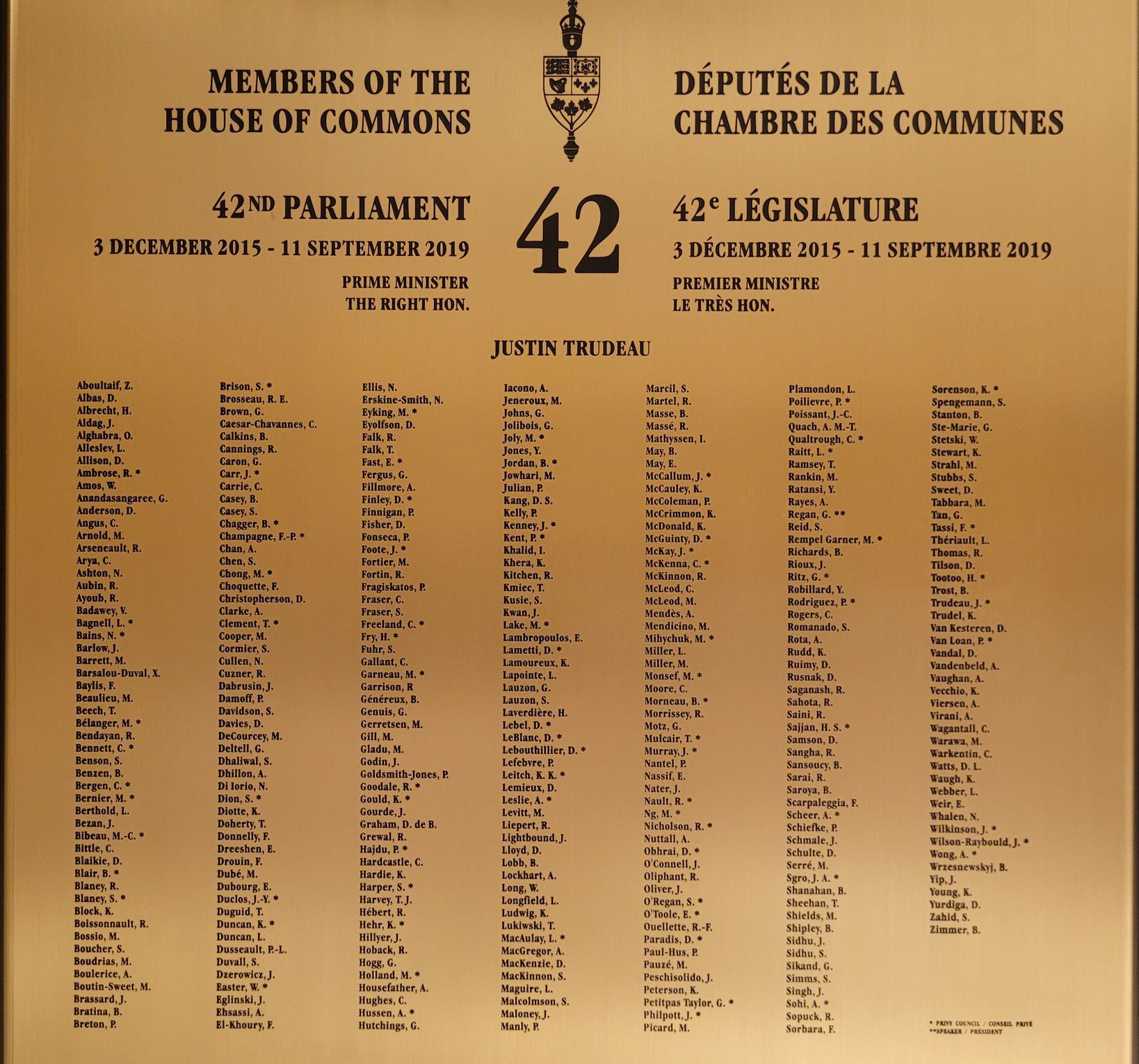 I can only hope that my next 42 years are as interesting as the last 42.